Economic Health
Why We Invested in Eka Robotics
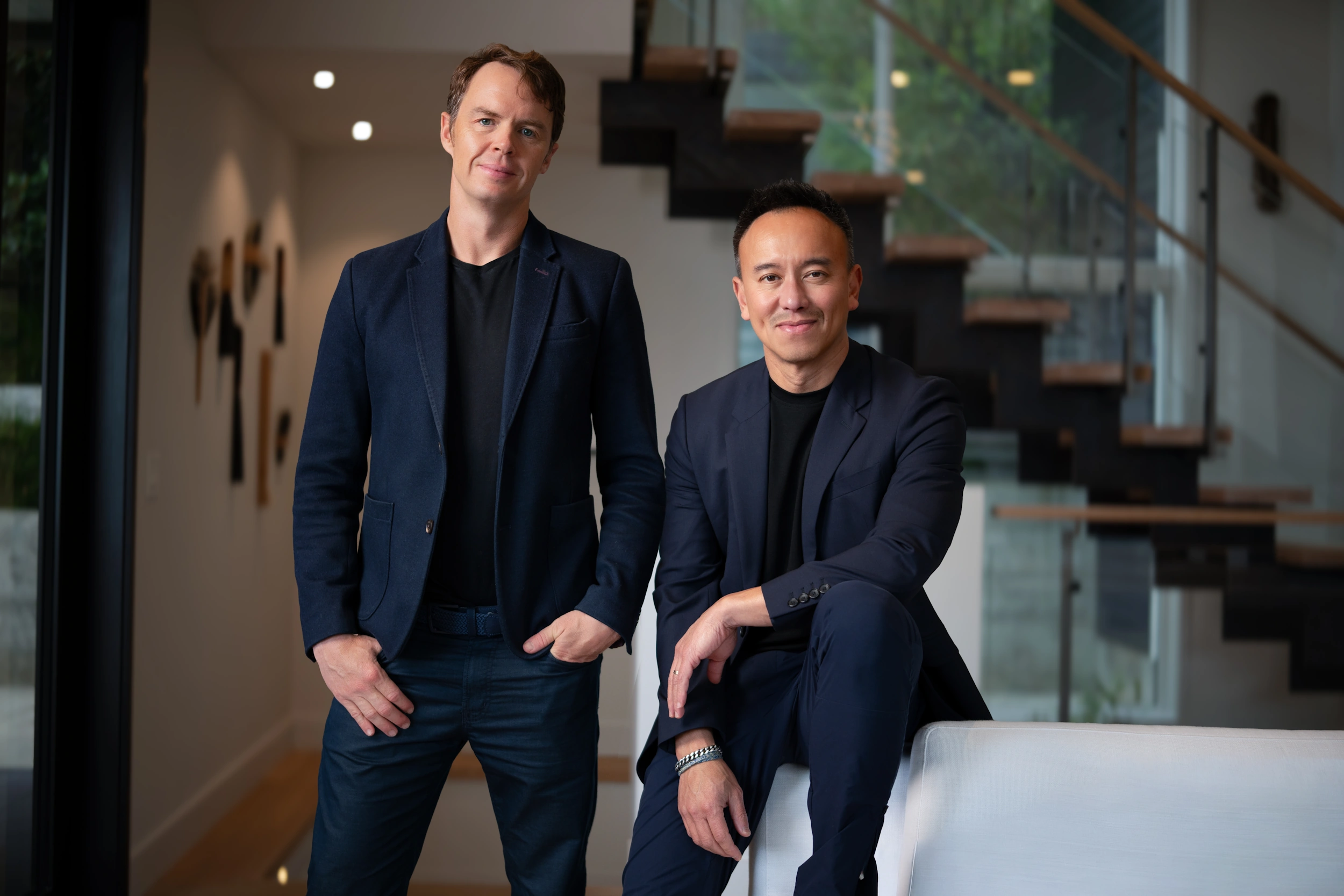
I still remember my first call with Pulkit Agrawal, co-founder of Eka Robotics.
He asked me if I had anything in my pockets. I didn’t, but I had some AirPods in my purse. He told me to pull them out.
“Okay,” he said, “what do you notice about how you did that?”
I observed that I used touch alone, not my eyes, to retrieve the AirPods.
“Why will foundation models never be able to replicate this behavior in robotics?” he asked. “What have they failed to encode?”
I was stumped for a moment.
The answer, he told me, was physics!

Eka is solving one of the most difficult and consequential problems in robotics—dextrous manipulation. To do it, the company is building a Vision-Force-Action (VFA) model.
Eka’s breakthroughs will fundamentally reimagine physical work, enabling us to automate dangerous, dirty jobs like trash sorting and meat packing. And as the U.S. population ages and the shortage of caregivers deepens, we could build robots that are safe and interactive enough to help at home, retrieving objects, folding laundry, and more.
A foundation model usually solves for generalization, allowing a robot to handle objects and situations it has never seen before. That’s important, but to do truly useful work, performance and safety matter just as much. Before we trust robots to pack our chicken breasts, let alone care for our elderly, they have to work reliably, safely, and quickly.
Performing these tasks requires a deep understanding of physics. How soft is the chicken breast? How much pressure would crush a bag of cookies? A robot can build an intuition for these tasks the same way I did while retrieving my AirPods—by accounting for forces and contact physics.
Eka trains its models in simulation using reinforcement learning. Simulation gives scale, and it compounds, improving with every new advance in coding agents, compute, and simulators. RL training gives performance.
Historically, the sim-to-real gap has been the primary barrier to training manipulation models in simulation. Pulkit pioneered the sim-to-real techniques in locomotion that underpin today’s quadruped and humanoid robot advancements. He’s now bringing those learnings to manipulation.
Eka is built on three convictions. That force is the language of manipulation. That reinforcement learning is how dexterous manipulation scales. And that System 1 (fast, reliable physical execution) is the key bottleneck to solve.
Those convictions, and its demonstrated expertise and record of success, are a big part of why we invested. The other part is the team.

Before Eka, Pulkit was already a world-class researcher, an MIT professor, and co-founder of SafelyYou. He’s widely respected in robotics as an orthogonal thinker who stays a step ahead in a field that changes constantly. He’s a visionary who also deeply values diverse perspectives—a rare combination. One conversation with Pulkit is enough to see that he thinks differently. He challenges you, and he challenges how the world works.
Pulkit met his co-founder, Tuomas Haarnoja, while they were PhD students at UC Berkeley. Tuomas created Soft Actor-Critic, an RL algorithm widely adopted across robotics today, and previously led DeepMind’s humanoid soccer research.
Obvious Ventures and E14 co-led the seed round of Eka Robotics in May 2025. Today, we’re thrilled that Eka has raised $150 million in a Series A, led by Andreessen Horowitz and F-Prime.
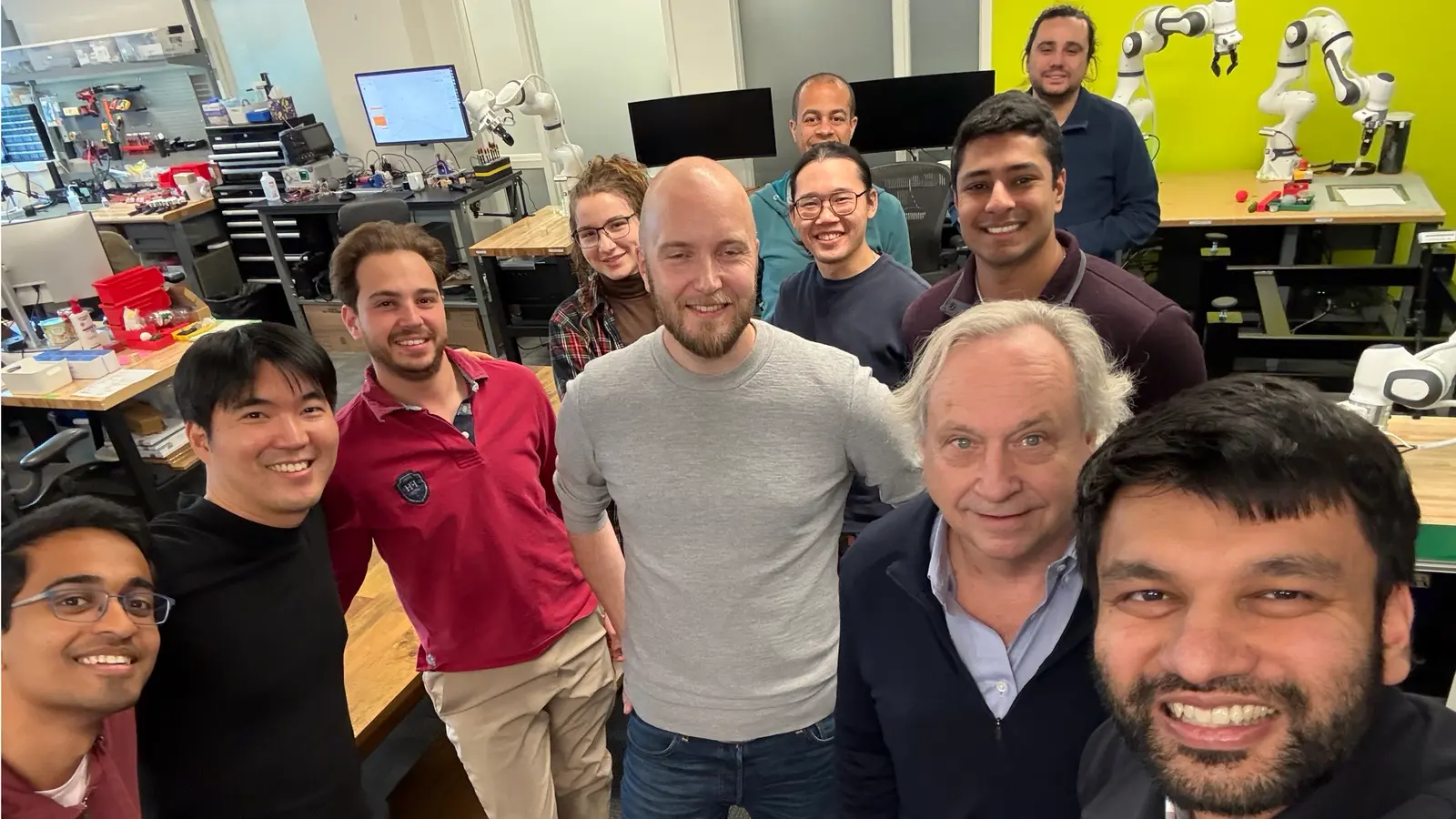
When we invested, Eka was just Pulkit, Tuomas, and founding engineer Kristian. In the 16 months since, we’ve watched the team outgrow three offices and recruit researchers and engineers from MIT, CMU, Boston Dynamics, DeepMind, and more.
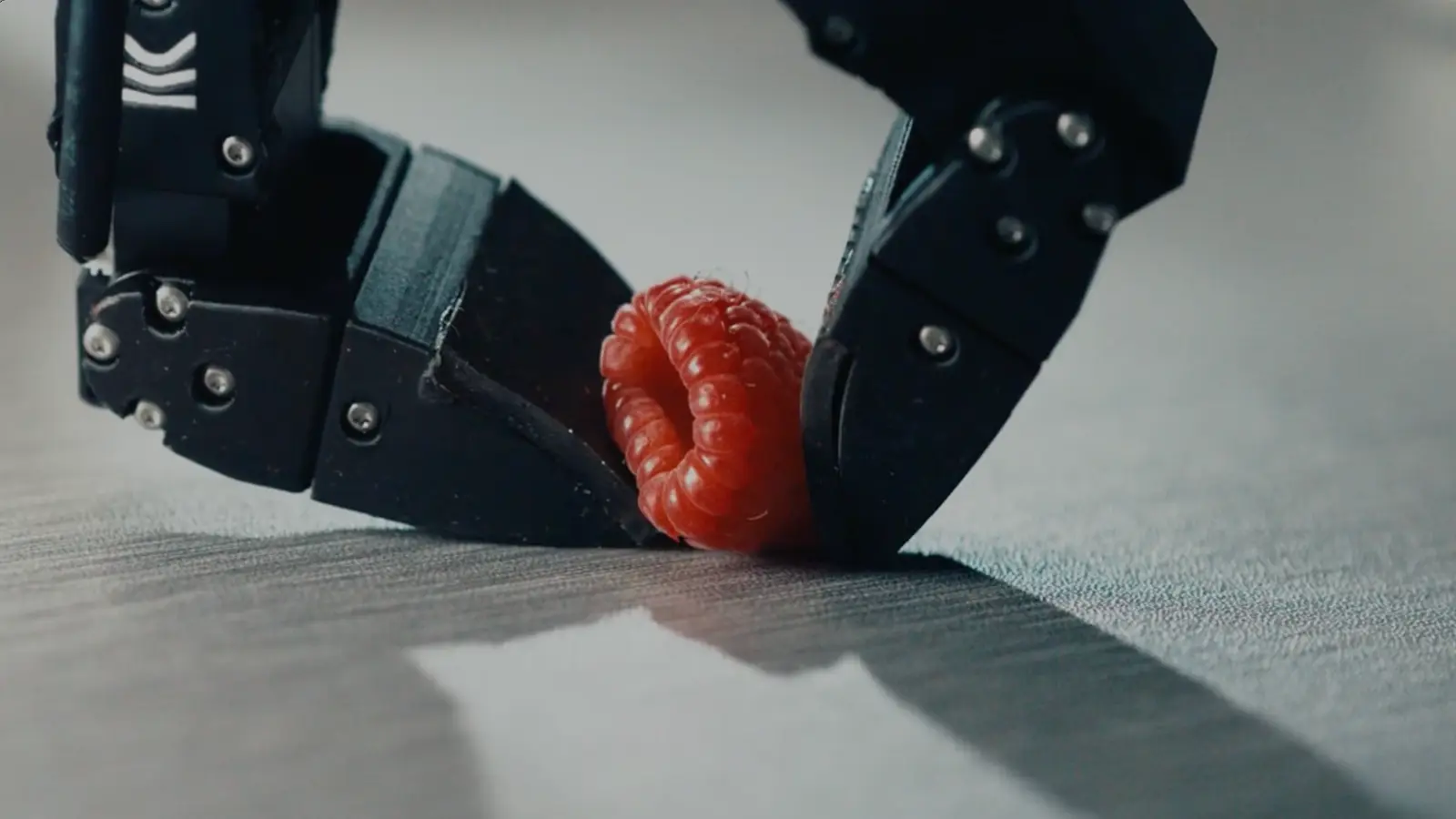
They’ve also turned research papers into a model that has generalized across objects, environments, embodiments, and as it scales, across tasks. On picking tasks, Eka’s robots reach 1,500 picks per hour, far surpassing the human benchmark of 600 picks per hour. They also operate without safety cages, safely alongside people, and with a touch gentle enough to take a single raspberry from a child’s hand.
The team has a rare blend of frontier research chops and sharp commercial sense. With this funding, we’re confident in their plans to scale development and accelerate customer deployments. We could not be more excited for the journey ahead.

Obvious Ideas