Economic Health
In Response to Bill Gates: It’s Time to Reimagine Capitalism
I’ll Take Bill Gates’s Bet on AI — And Raise Him
A few days ago, Bill Gates published a remarkable essay on artificial intelligence and our future. It covers the crowded waterfront of AI commentary, but it is seminal in its synthesis. And it ends with a call I want to answer.
Gates writes: “We need a plan to ensure that the good outweighs the bad.”
We certainly do. Amid headlines about model jailbreaks, communities fighting data centers in their backyards, and tempers flaring from city council meetings to campaign rallies, Gates’s essay could not be more timely. Many of his ideas and concerns — a tax on robots, a category of “human-reserved” jobs, the imperative to face the many vexing questions about AI’s promise and peril — are insightful and provocative.
What resonates most, however, is Gates’s insistence that we cannot leave this transition to chance. That conviction runs deep for me. I’m the grandson of refugees: I know what it means when the future is left to forces beyond one’s control. And, before immigrating to the US, I grew up between two places that chose otherwise: Chandigarh, India’s city of deliberate design, and the Himalayan kingdom of Bhutan, which measures its citizens’ progress by their flourishing rather than income growth.
Gates is not the first, of course, to sound this note. Economists like Erik Brynjolfsson and Ajay Agrawal have been tracing AI’s stakes for years, lately with sharpened urgency. Two of the field’s own architects, Yoshua Bengio and Geoffrey Hinton, having built this technology, now number among its most uneasy seers. Gates is lending this swelling conversation his particular reach.
I welcome his authoritative voice. As an investor backing companies that take on our hardest systemic problems, I share Gates’s sense of the scale of what’s coming. “It’s hard to overstate what an enormous undertaking this will be,” he writes, laying out the hurdles: the reorganization of government, the reinvention of tax systems and education, the expansion of social safety nets, the hard work of keeping powerful systems safe, and more.
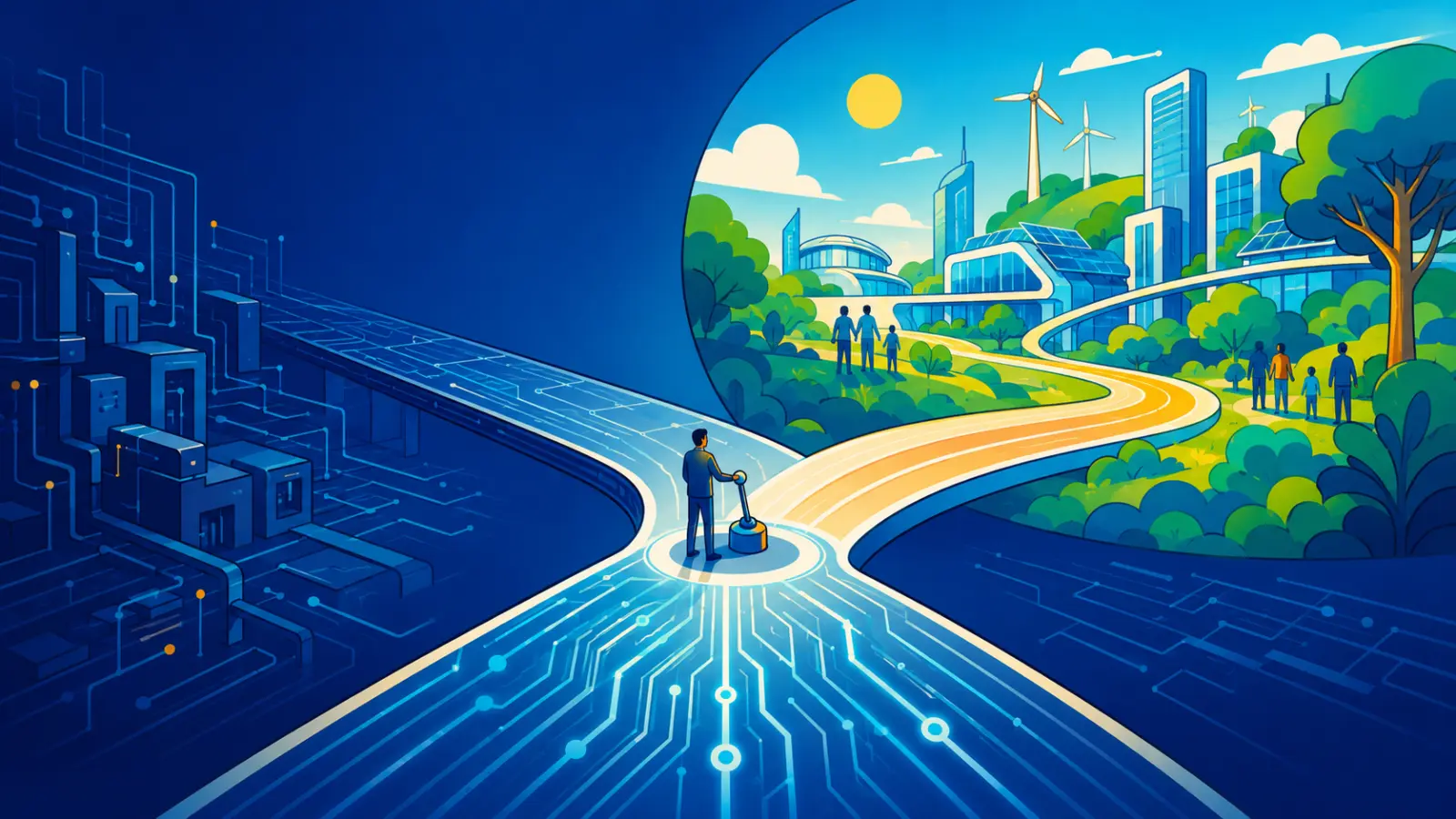
I’ll take Gates’s bet that humanity can rise to this. But I’ll also raise him.
Because Gates makes an argument he doesn’t quite follow to its end. AI, he writes, “can improve life for people at every income level. But it won’t do that automatically… we have to be deliberate.” That is exactly right. In fact, it is the whole game. Abundance does not author its own flourishing. The benefits are not automatic. The deciding is the thing.
Being deliberate requires more than managing AI well. As Gates argues, we need smarter governments, better international coordination, and new international institutions built for the challenge. Yet what it requires, more deeply, is reinventing the very instrument by which we measure value: the ledger beneath the entire economic and civic order that AI could rupture.
In short, we need to reimagine capitalism itself, using the very technology at the heart of Gates’s sweeping appeal. I’m a capitalist to my core, and a committed technologist. Which is why I believe this emerging technology gives us, for the first time, the means to cure a myopia that has dimmed capitalism’s countless gifts for five centuries. That myopia is rooted in scarcity. Capitalism was built for a world of scarcity. Abundance asks something different of us: to see the world as positive-sum, where one person’s flourishing need not come at another’s expense, or the planet’s.
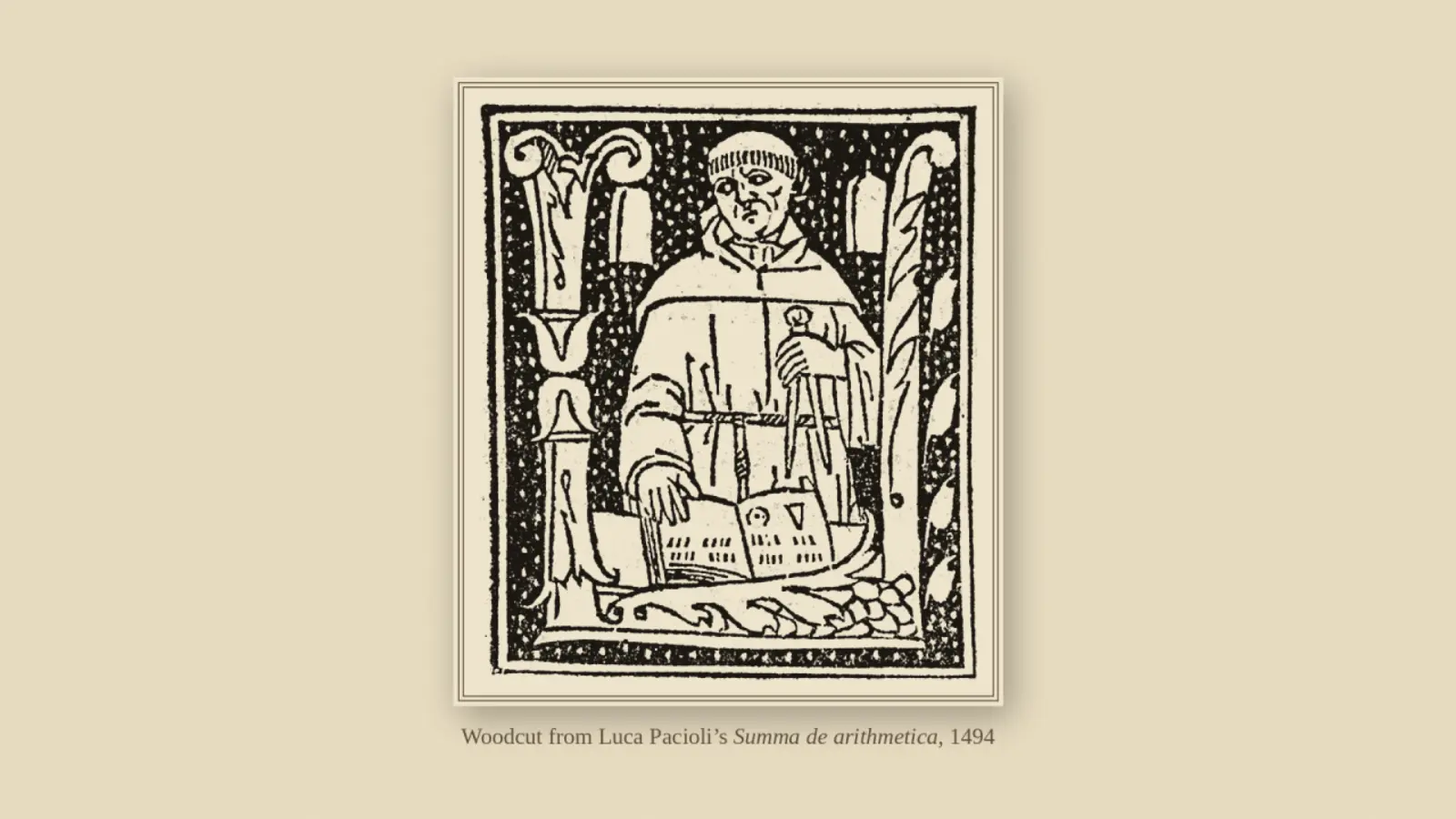
I date the invention of modern capitalism to an accounting innovation made by a Tuscan friar, Luca Pacioli, in 1494. Double-entry bookkeeping was a genuine marvel; it built the modern world. But it installed a ledger that counts only what carries a price — a limit invisible then, and costly only at scale. Five centuries later, we are still looking through that same narrow aperture, just at ever higher resolution.
That ledger has carried capitalism through six stages, a progression I’ll trace in a later essay. Throughout, it has lifted billions out of poverty, trebled lifespans, and created an abundance unimaginable in living memory. But it has done so at an extractive cost: heating the house by burning the furniture, accelerating climate change, and hollowing out the bonds between us.
So here is my raise to Gates: let’s bring our full moral ambition to the deepest challenge of all — the ledger itself. Not to price what we’ve left uncounted, but to build an account answerable to the flourishing it leaves out.
Sometimes I think we are as the Romans were with their aqueducts, made by magnificent engineers who could build, maintain, and measure a vast system without the math of fluid dynamics. When it failed, they blamed the stones. They had no model of the whole, and paid for it in time.
The late Senator Robert Kennedy captured it, a few months before he was assassinated in 1968. Our economic measures, he said, count “air pollution and cigarette advertising, and ambulances to clear our highways of carnage.” And yet the gross national product “does not allow for the health of our children, the quality of their education, or the joy of their play… it measures everything, in short, except that which makes life worthwhile.”
Nearly sixty years later, the instruments are vastly more sophisticated yet essentially unchanged. The market’s daily verdict, the weekly jobs report, the monthly inflation print, the quarterly earnings, the annual GDP. These are so ingrained in how we see that we scarcely question them at all. A growing number of serious thinkers, at Harvard, at Stanford, and beyond, have begun probing the gaps in how we measure what matters. I mean to build on their work, and to go further: the flaw is not in this or that metric, but in the ledger beneath them all.
I believe it is time for a seventh stage — a way of organizing our economic life beyond the narrow measures of daily indices, quarterly reports, and annual GDP. I call it World Positive Capitalism: capitalism with its engine intact, running on a wider ledger. It lets capital flow to breakthrough solutions for our hardest systemic challenges, at the scale only markets can reach. Its wager is this: the same technology that threatens to deepen every divide is also the first tool powerful enough to help us see, and finally count, what the old ledger never could.
To do so is to widen not just our ledger but our awareness — to see more of what is real, and more of one another. The laws of physics build our technologies; it is our consciousness that decides what to do with them.
And that deciding is the work ahead.
AI is, at bottom, a technology of both knowing and doing. It promises to place at our fingertips not merely the internet-proximate or the Western canon, but the whole of human understanding — the wisdom of every tradition that the old ledger, and the old canon, left uncounted. It is a tool that can widen not just what we measure, but what we are able to see.
There is a word for the value that lives only between us — the kind no ledger of isolated transactions can capture, because it is not a property of individuals but of the relation itself. In the Nguni languages of southern Africa it is ubuntu — a person is a person through other persons. Here is consciousness turned outward: the self, understood not as a thing but as a relation. It is one of many older wisdoms that a wider ledger, and a more capacious technology, might finally allow us to count.
I’m getting ahead of myself — and I know, as an engineer and old product manager, that you never launch anything without the insight you’ll wish you’d included, or the idea that arrives only after you hit send. So I’ll say just this for now.
The ledger was invented to record trade. And trade — from the first stone axe swapped for a basket of fish — was always a means to something older and simpler: a better life, and a less solitary one. Somewhere across five centuries, the means forgot the end. The record grew vast and exacting, and we began to serve it rather than ask what it was for. To decide well is to reverse that order — to build a ledger that remembers what it was for: not accumulation for its own sake, but human flourishing, on a living planet, in one another’s company. There is no trade worth the name on a dead planet, or in a world that has stripped its people of purpose.
Commerce was always meant to make life better. If it doesn’t, the fault is ours.
Obvious Ideas