Operations
It’s Time to Ask Why
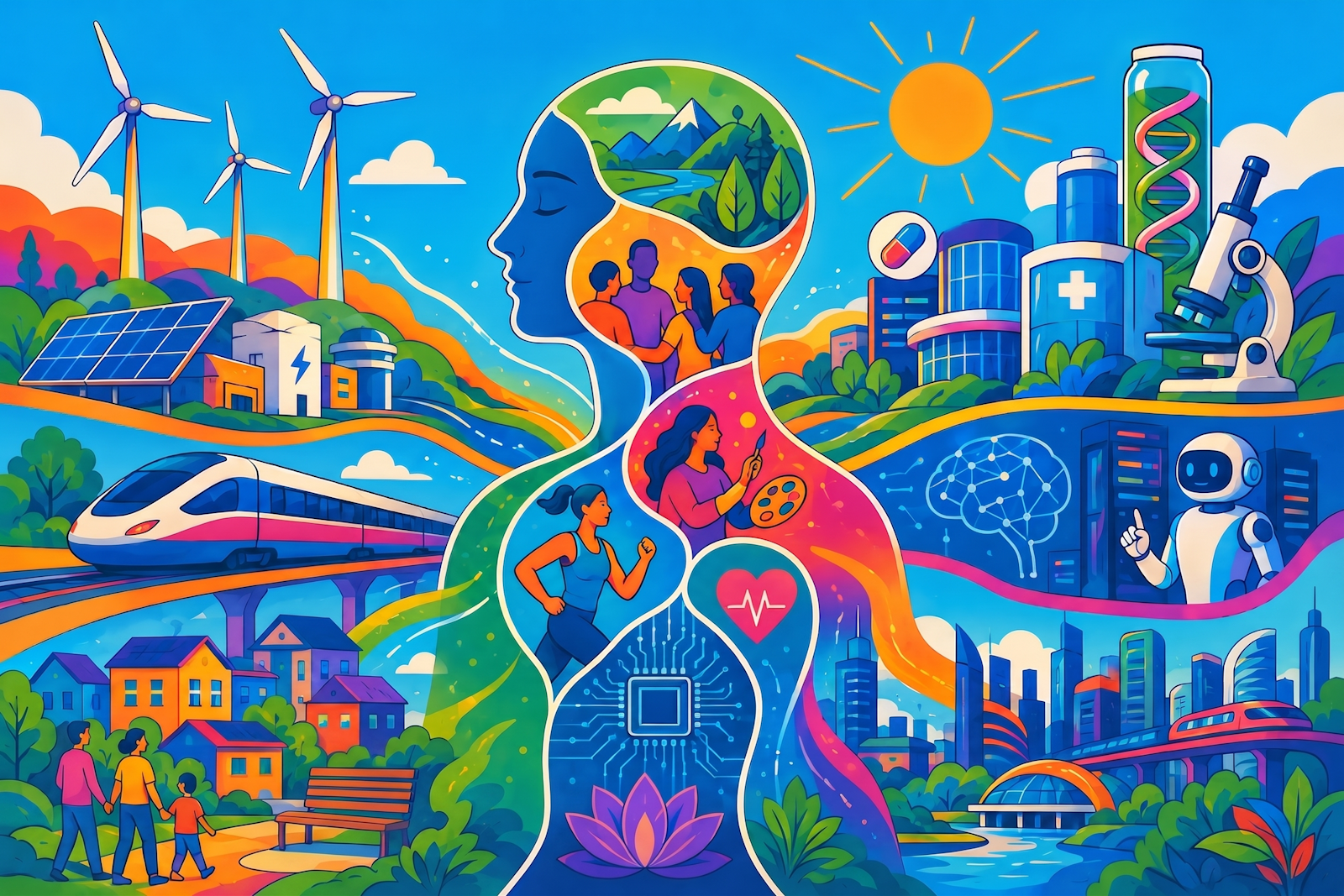
Physics determines what we can build. Consciousness asks what we should.
This article is part of a series about a new form of capitalism that supports and enriches humanity. Read Part 1 here.
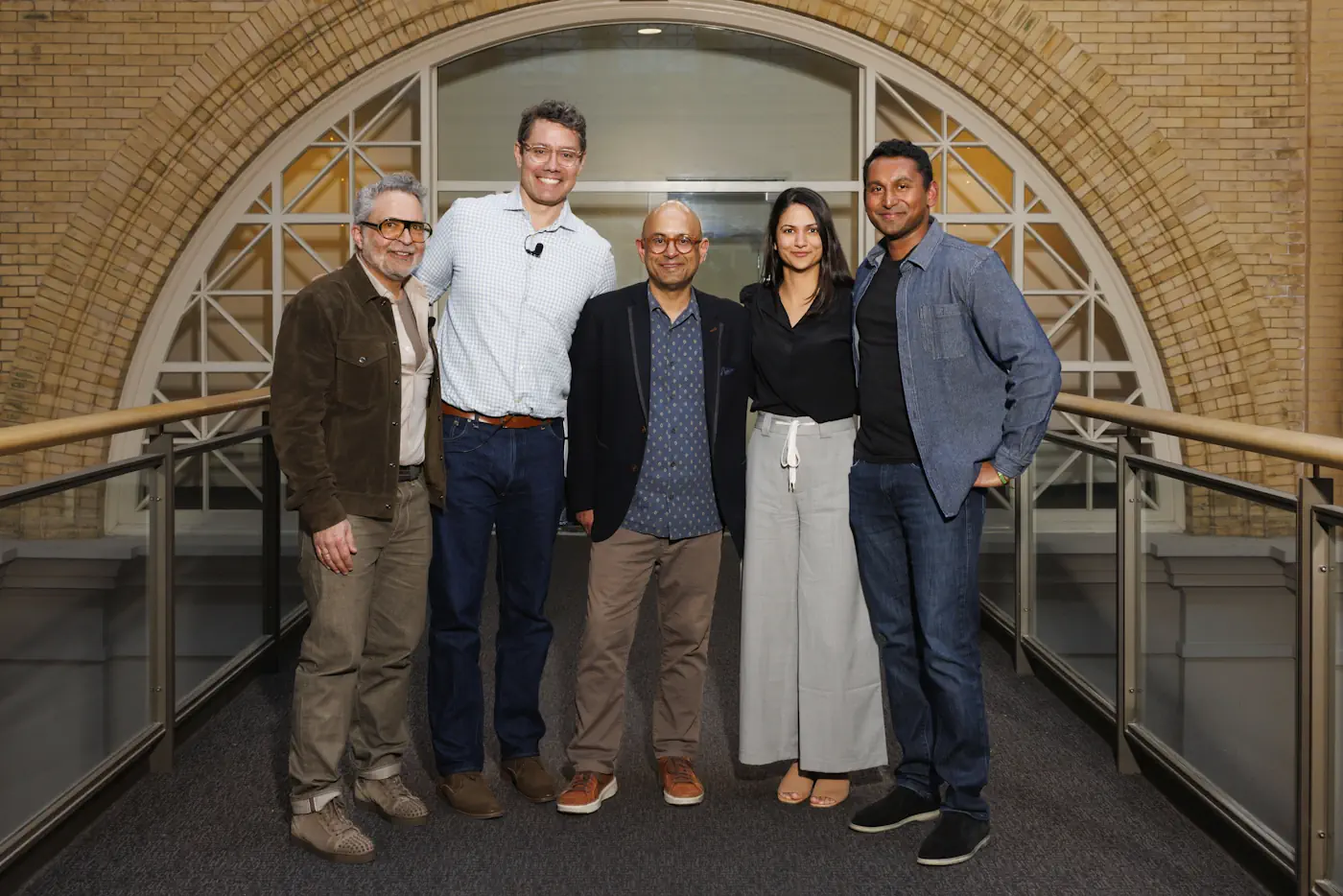
Not long ago, I sat in a room with some of the sharpest minds on the planet. I was speaking at an IIT conference, surrounded by engineers and scientists articulating a breathtaking vision of the future. Then Sadhguru, the Indian guru and founder of the Isha Foundation, joined us for dinner, and he quietly dismantled the whole premise of the evening.
He described the human mind as a stack. Our intellect cuts the world into useful pieces. Our identity is the hand that holds it. Memory, which he described in eight forms, from genetic to karmic, exists to protect that identity. The whole apparatus, he said, helps us survive and thrive.
And then came the observation that stayed with me for days. So many of today’s AI tools can now replicate our most basic functions. They can store memories, retrieve them, analyze information, and express new ideas with remarkable clarity. They can do it faster and cheaper without any ego getting in the way.
So what exactly is left that’s distinctly human? His answer was consciousness. Or what he called a sense of pure awareness.
We have arrived at a moment when the first engine of progress—technology, physics, and the raw ability to build—is accelerating beyond anything humanity has ever seen. Dario Amodei has suggested that AI will compress a century of scientific discovery into a single decade. He may be right. It’s time to ask whether the second engine, our deliberate sense of consciousness, can keep up with this change.
Consciousness is our collective operating system
Steven Pinker spent years compiling what ought to be one of the most reassuring datasets in human history. In his book Enlightenment Now, Pinker showed that across every major dimension of the human condition, the world has improved dramatically over the past two centuries. Poverty has fallen, literacy has spiked, violence is down, and so are worldwide rates of disease. Life expectancy has reached new heights. These gains did not come easily. They came through conflict, through suffering, through false starts and genuine catastrophes. But they came.
I read Pinker as an observer of the evidence around him. To me, his data suggests that something is happening beneath the surface of events. In any given moment, certainly in our present moment, it is easy to see only chaos. Wars, polarization, the erosion of trust in institutions. But zoom out a century and the broader picture is different. Slavery was abolished. Women won the vote. Child labor became unthinkable in the societies that once accepted it.
Why? Because humanity has a collective consciousness, and it learns. Martin Luther King referred to it as “the moral universe” and famously noted the way its arc, while long, bends toward justice. Somewhere in the shared memory of civilization, it registers what cruelty costs and what dignity is worth. It registers what changes would serve the collective good, and which would not. Our individual consciences are shaped by this larger awareness.
Serious researchers are now studying the ways in which consciousness, both individual and collective, operates across networks of people and organisms. This has long been a question of philosophy. But there is genuine science here. The emerging answer is that our interconnected sense of consciousness works like a single operating system. And with accelerations in science and technology, it seems like we are about to test that operating system in ways we never have before.
A compass for our intelligence
Spend time with innovators today and you will find one dominant conversation: What can we build next? I hear it every day. The physics seem almost limitless. This is the first engine of progress, and it is extraordinary.
But there is a blind spot. Some of the most powerful voices shaping AI today are actively dismissive of the question of should. They want to go faster, build more, accumulate capability, and win races. The discipline of asking For what purpose? is treated as a distraction, even a weakness in a competitive market. The Indian philosopher Jiddu Krishnamurti warned us about this mistake decades ago. Technological progress without inner transformation doesn’t elevate humanity, he wrote. It just gives us more sophisticated tools—like better weapons and more efficient ways to exploit each other—to repeat our oldest mistakes.
History is full of times we missed the mark, when we ignored consciousness or scaled a technology before we understood the consequences. Social media brought people together, but as we now know, it came at a high cost of isolation and mental health disorders, especially in teenagers. Industrial chemicals have made food more abundant and cheaper, but bring health risks we’re only beginning to understand. Leaded gasoline poisoned communities, CFCs broke a hole in the ozone layer, fossil fuels have polluted the planet. Our consciousness sometimes takes a long time to understand and even longer to correct course.
This is the context in which Michael Pollan’s new book, A World Appears, feels so essential. Pollan has spent years exploring the nature of consciousness, through psychedelics, through plant intelligence, through the “hard problem” that has stumped philosophers and neuroscientists for generations. And one of his most important arguments is precisely the one we need to hear right now: intelligence and consciousness are not the same thing.
AI is trained on us. It knows what we say, how we phrase things, what we reward with clicks and attention. Because of this, it has learned to give us what we want to hear. When it doesn’t know the answer, it confidently invents one because LLMs are optimized for engagement. It is a structural feature of any intelligence without embodied experience. A model can’t suffer the consequences of being wrong.
Human consciousness is different. We build our consciousness through friction. We learn our awareness of ourselves and the world through setbacks and loss and the long process of learning what our actions cost. We evolve because we have bodies that can be hurt, relationships that can be broken, and memories that accumulate. Pollan’s research makes this case with extraordinary clarity. He writes that feelings are not weightless data distractions. They are tied to vulnerability and embodied experience. Strip those away, and you don’t have consciousness. You have one-dimensional pattern matching.
David Brooks made a related argument in The Atlantic this spring, tracing a continuous line of inquiry from ancient philosophers through modern neuroscience to push back on the idea that introspection is a fashionable fad with no intellectual lineage. Thousands of years of thinkers have understood that introspection and self-awareness are a precondition for seeing others clearly and finding the truth. They’re the foundation for genuine empathy, and for the kind of moral attention that progress actually requires. You cannot build a world worth living in if you have never seriously asked yourself what kind of world that is.
We must build a global consciousness movement to lift each other up
It gives me hope that consciousness can be developed and tapped, like learning to read, or ride a bike.
Richie Davidson‘s research in contemplative neuroscience has shown that meditating produces measurable structural changes in the brain in a matter of weeks. Michael Pollan’s psychedelics research offers a more provocative version of the same insight: in carefully guided contexts, these experiences can catalyze in hours the kind of perspective shifts that might otherwise take years. Consciousness can be upgraded, and quickly. We can all be awakened and enlightened. We simply have not invested in it at anything close to the level or pace that we’ve invested in data networks and compute.
Vivek Murthy, who served as Surgeon General of the United States and who I consider one of the clearest thinkers on what human thriving actually requires, has made the empirical case for building tomorrow’s tools with a wide view of long-term impacts on people. Weak social relationships increase the likelihood of premature death by fifty percent, almost the same as smoking fifteen cigarettes a day. We have built extraordinary tools for productivity and information. We have underinvested, catastrophically, in the conditions that allow human beings to actually flourish, like connection, purpose, service, and the sense that your life is woven into the lives of others.
This is especially relevant to today’s rapid technology acceleration. A world of efficiency—of abundant energy and inclusive economies and democratized medicine—means nothing if people are living in isolation and without a sense of purpose or meaning.
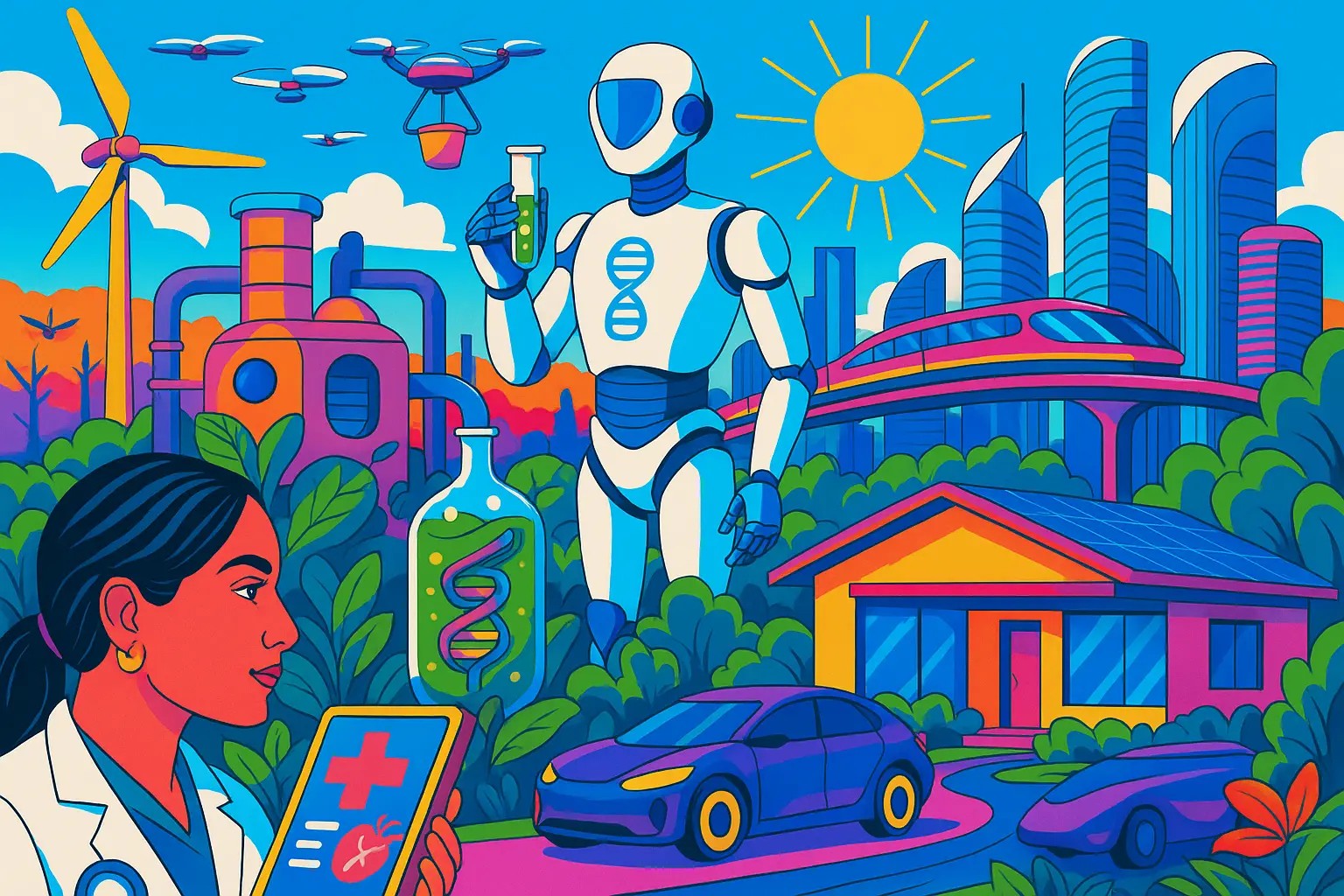
This is the upgrade to what I’ve previously called World Positive Capitalism. The framework I laid out in 2025 was a map of what we need to build. But how we build it depends on which goals we should prioritize. Physics can generate the energy abundance, longevity breakthroughs, and the economic democratization we are beginning to see. Consciousness has to decide whether those breakthroughs serve the many or the few, whether they liberate or surveil, whether they deepen human connection or hollow it out.
Planning for what can go right
World Positive Capitalism is a challenge to the zero-sum framing that for one person to get rich, someone else has to get poorer. I think of it as a “positive-sum” wager on what becomes possible when you point the full power of innovation at the right goals.
At Obvious, I’ve seen how world positive breakthroughs reinforce each other. Clean energy reduces pollution, which improves public health. Healthier people contribute more fully to the economy. A stronger economy invests more in education, innovation, and sustainable systems. Each advance makes the next one easier. No one needs to lose for someone else to win.
A hundred years from now, if Steven Pinker were writing the sequel to Enlightenment Now, I think he’d write about a transformation in the structure of opportunity itself. He’d see a world where abundant clean energy, AI-powered medicine, and democratized education have collapsed the gap between what the privileged once had and what everyone does. He would find that the question of who gets to be healthy, educated, and economically secure has a radically different answer than it once did. He’d see that the arc of collective consciousness finally had the tools to match its ambitions.
Getting there ultimately requires all of us. Entrepreneurs, investors, and policymakers need to consistently choose the positive-sum path even when the extractive path is faster and more immediately profitable. We need to learn how to ask not only Can this be built?, but, Does this serve the flourishing of people and the planet?
The seeds are planted. The arc is in motion. Physics shows what is possible. Consciousness decides what we build. History will belong to those who work where the two meet.
Obvious Ideas