Operations
How I Got to Now: James Joaquin

Before James Joaquin wrote his first term sheet, before he co-founded Obvious Ventures to deploy capital against civilization’s hardest problems, his family had already been running the same basic algorithm: identify an improbable bet, accept the downside risk, and sail toward it anyway.
His great-grandfather, a Cape Verdean man, worked the deck of a whaling ship in New Bedford, Massachusetts, in the late nineteenth century. At its peak in the 1850s, New Bedford was one of the wealthiest cities per capita on earth and the global headquarters of an industry that had figured out how to turn oceanic risk into staggering returns. Of the roughly nine hundred whaling ships plying the world’s oceans in 1850, seven hundred were American, and seventy percent of those were from New Bedford.
Those New Bedford merchants had quietly invented venture capital. Crewmembers were compensated with shares of the voyage’s final proceeds—an early form of equity—while specialized agents pooled capital from wealthy investors, spread risk across multiple ships, conducted something resembling due diligence on captains and routes, and retained a cut of the returns. The structure aligns almost eerily with the modern venture fund. The power law distribution of returns, the portfolio theory, the carried interest model, all of it was tested in the North Atlantic before anyone in Silicon Valley put on a fleece vest. The harpooner, standing at the bow with everything on the line, was the essential variable. You had to get it right.
James Joaquin was born in New Bedford and grew up in Fairhaven, the fishing town next door, in a household that treated risk as a baseline condition. “My parents and my older sister were all inspirations for me because they took great risks to start their own businesses,” Joaquin says. His father was a self-taught engineer turned factory foreman who eventually ran his own liquor store. His mother was a math prodigy who secured the only accounting job in town during the Depression, an achievement that in any era would qualify as remarkable product-market fit. She later worked two accounting jobs simultaneously to bankroll her son’s tuition at Tabor Academy, the local private school. Despite the long hours and exhausting days, she still managed to sit with Joaquin at the dinner table each night and teach him double-entry bookkeeping. In that house, math was a second language.
At Tabor, James landed in an accelerated calculus track and spent his afternoons in the math department programming BASIC on a donated Wang computer which, in the early 1980s, put him one step ahead of most of his generation. He found someone else working in the future: his math teacher, John Hughes, who had helped engineer the MIT Whirlwind real-time computer in the 1950s and was then designing what would become one of the first AP Computer Science curricula ever offered. Hughes made young Joaquin a proposition. Would he want to become the test subject for the new course, learn a language called Pascal, do it entirely after school, complete a lot of extra work, and receive zero course credit? Joaquin said yes.
Hughes and Joaquin had other common interests, and even became friends. Both were avid sailors and occasionally sailed Hughes’s wooden-hulled yawl in Buzzards Bay. They tacked across the same waters that New Bedford whalers had navigated a century before. Hughes was not only a mentor, he was also Joaquin’s first proof of concept for a thesis he would spend the rest of his career refining: that the people who shape the future tend to find each other early, often in unglamorous rooms, and that the best strategy is sometimes saying yes to a fleeting invitation.
He turned down MIT after high school because MIT didn’t yet have a computer science degree. Brown did, so in a department led by Professor Andy van Dam, one of the field’s genuine pioneers, Joaquin did what the best technical minds of his generation were learning to do, he refused to stay in his lane. He cross-registered at RISD, started a rock band, and began developing a bold idea that would define his career: that the boldest ideas live at the collision points between disciplines, in the territory that doesn’t yet have a name.
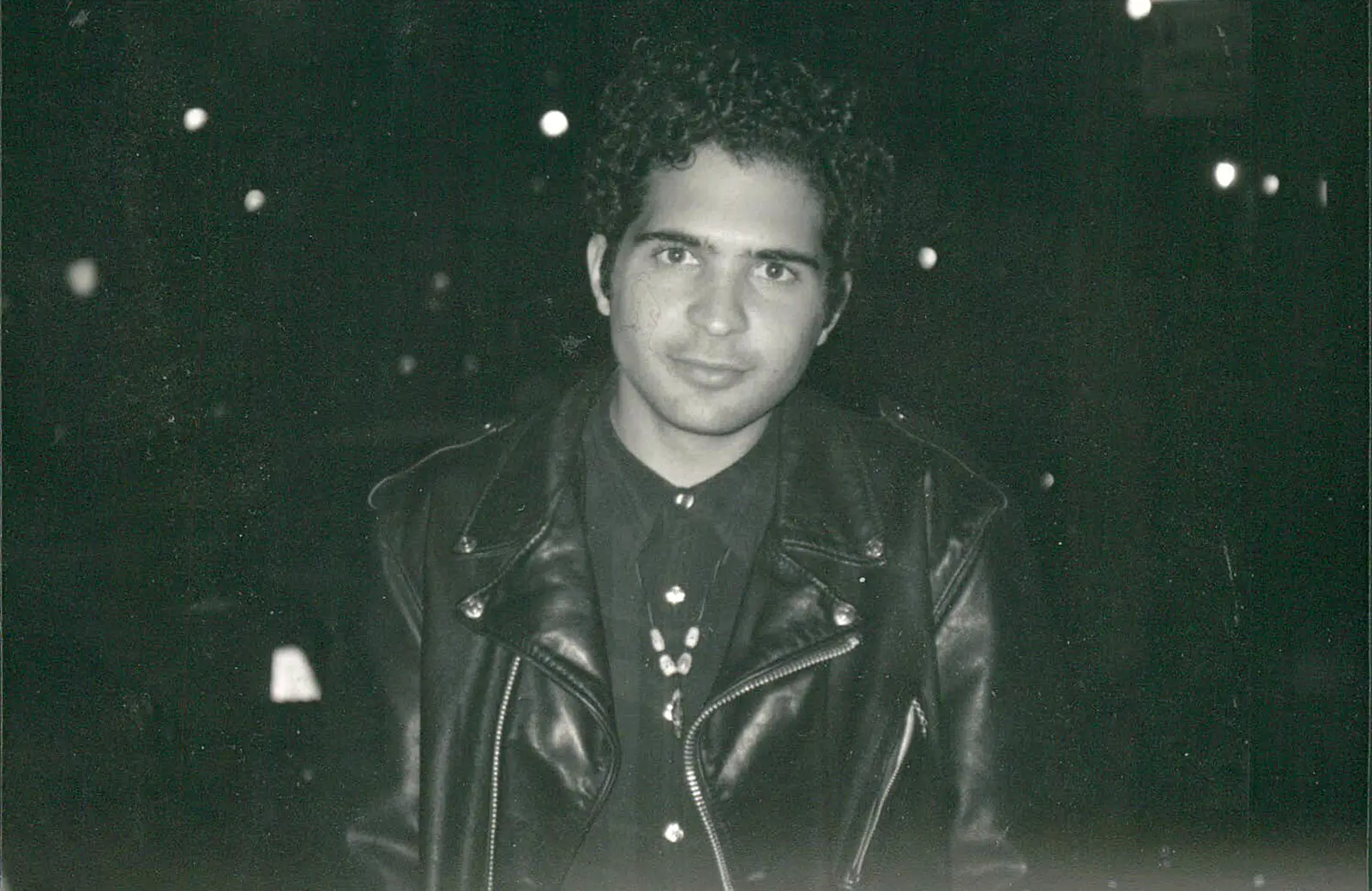
His first startup came out of Brown, built on the original Macintosh that Steve Jobs introduced in early 1984. That company was acquired by Apple, and he spent six years working in Cupertino, first as a software engineer, then in product marketing for a top-secret project sequestered in a building on Bubb Road.
That project became the Newton—a handheld computer and an early technological paradox. The Newton was, by almost any commercial metric, a failure. It was also, by almost any technological metric, a prophecy. The ARM 1 processor was developed specifically for Newton through a joint venture between Apple, Acorn, and VLSI. ARM has become the architectural foundation for mobile computing as we now know it. It runs inside every smartphone on earth.
Newton was a stack of bleeding edge technologies in search of a market. It was a communications device that launched before we had the Internet or wireless data. For Joaquin, the Newton was a lesson about the two variables that determine whether a breakthrough becomes a business: market timing, and the distance between what technology can do and what a customer is prepared to pay for.
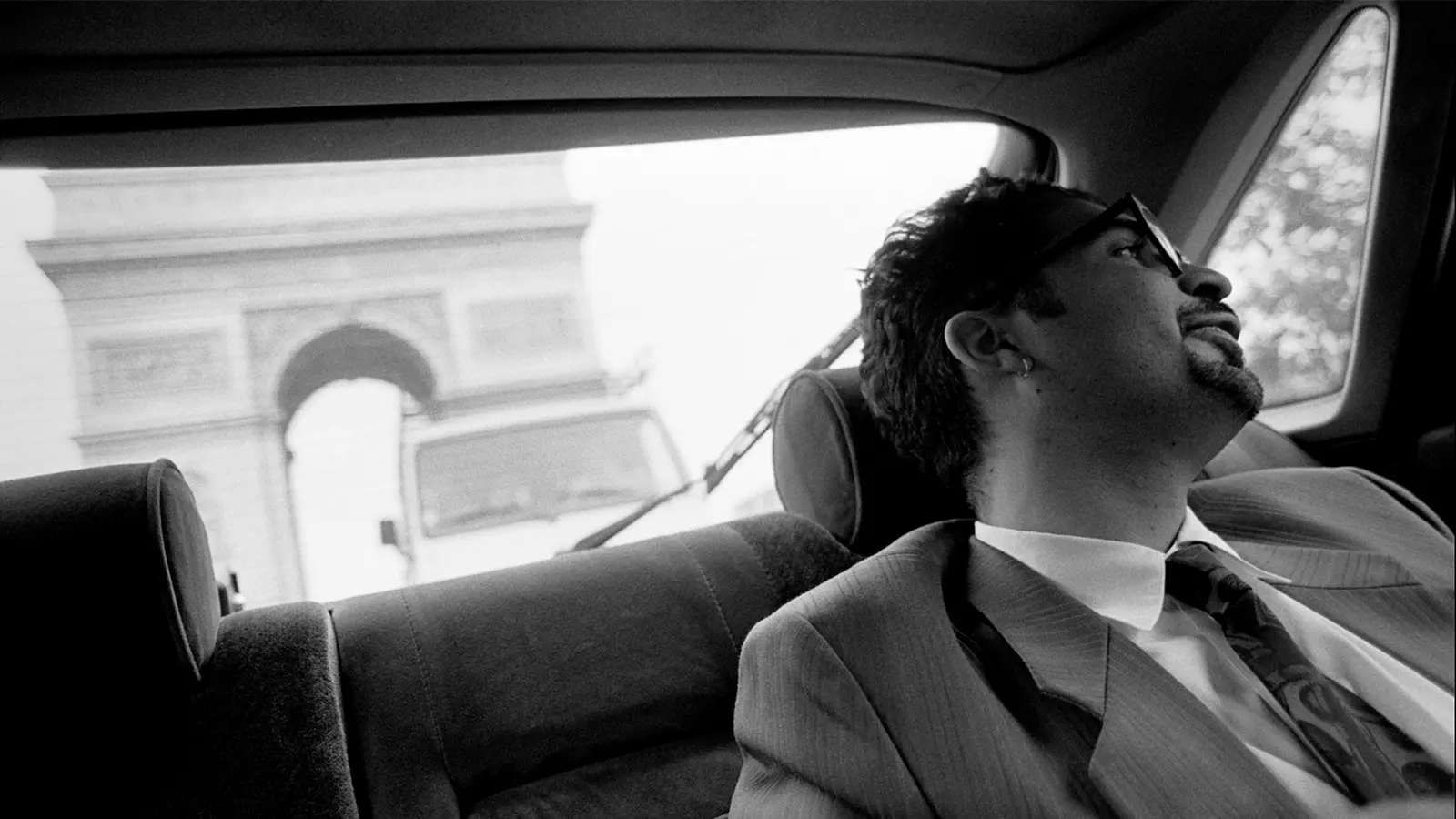
When the internet arrived, the winds changed in Silicon Valley. Joaquin reset his heading again. He co-founded When.com, the first web-based calendar and events service, partnered with Netscape, and sold to AOL, a clean, fast voyage by the standards of the era. His next move was more ambitious. As President and CEO of Ofoto, he built what became the world’s most-used photo sharing service, inventing private online photo sharing at the precise moment that digital cameras were making film obsolete and giving millions of people a new problem they didn’t yet have language for. “I personally rediscovered my love of photography while building Ofoto,” he says. “We helped tens of millions of friends and families reconnect across long distances.”
That era was also when Joaquin met and married his wife Zem. They would have two children, who would become—by Joaquin’s cheerful accounting—the most extensively documented humans of their generation. Ofoto sold to Kodak in 2001, and Joaquin stayed on to run the subsidiary.
Then came the invitation from Brown. Professor Andy van Dam and artist-in-residence Anne Morgan Spalter were assembling a new CS class on digital imaging and wanted Joaquin back in Providence for a guest lecture. Once again, he said yes. During the campus visit, he was introduced to the current CS faculty and stopped cold at a name on the roster: John F. Hughes. Was this the son of his late mentor from Tabor? He wrote an email to ask. Hughes responded that he was. The two spent an afternoon reconstructing a man who had mattered enormously to both of them. The son was now teaching at Brown, carrying his father’s work forward in the same discipline, a generation removed.
That afternoon reoriented something in Joaquin. The chain—student to teacher, mentee to mentor, the taught becoming the teachers—had been running through his life. He was ready for a new role in it. After a final CEO turn at Xoom.com, he made a deliberate choice to put the operator’s toolkit down and pick up something different. When Bridgescale Partners offered him a position as a venture partner, the answer was the same it had always been: yes. “Venture capital is an apprenticeship business,” he says. “I have been fortunate to learn from veterans who shared a wealth of knowledge.” He had spent his career building. Now he wanted to back the builders.
An argument emerged from that apprenticeship. It was an investing thesis that Joaquin had been developing with his longtime friend Evan Williams over the course of many conversations, and that crystallized, around thirteen years ago, into something actionable. The argument was that venture capital, properly aimed, was the highest-leverage instrument for solving humanity’s biggest problems. And almost none of it was focused on those problems. Williams and Joaquin teamed up with former Patagonia executive Vishal Vasishth, founded Obvious Ventures, and set about proving the thesis. Their first recruit was Andrew Beebe, now a Managing Director, who has been stress-testing that thesis with them for over a decade.
Today, Obvious manages $1.5 billion in capital across planetary health, human health, and economic health, with a portfolio that would have seemed audacious even by New Bedford standards. Which is, when you follow the thread all the way back, exactly the point. James Joaquin grew up in that shadow of the once-vibrant whaling industry and has spent his career making sure the companies he backs don’t just generate returns, but also lasting impact. The harpooner. The accountant. The venture capitalist. Different instruments across different centuries, with the same audacious bet on a better future, just over the horizon.

Obvious Ideas