Planetary Health
The Next Phase of Electrification Will Drive Itself
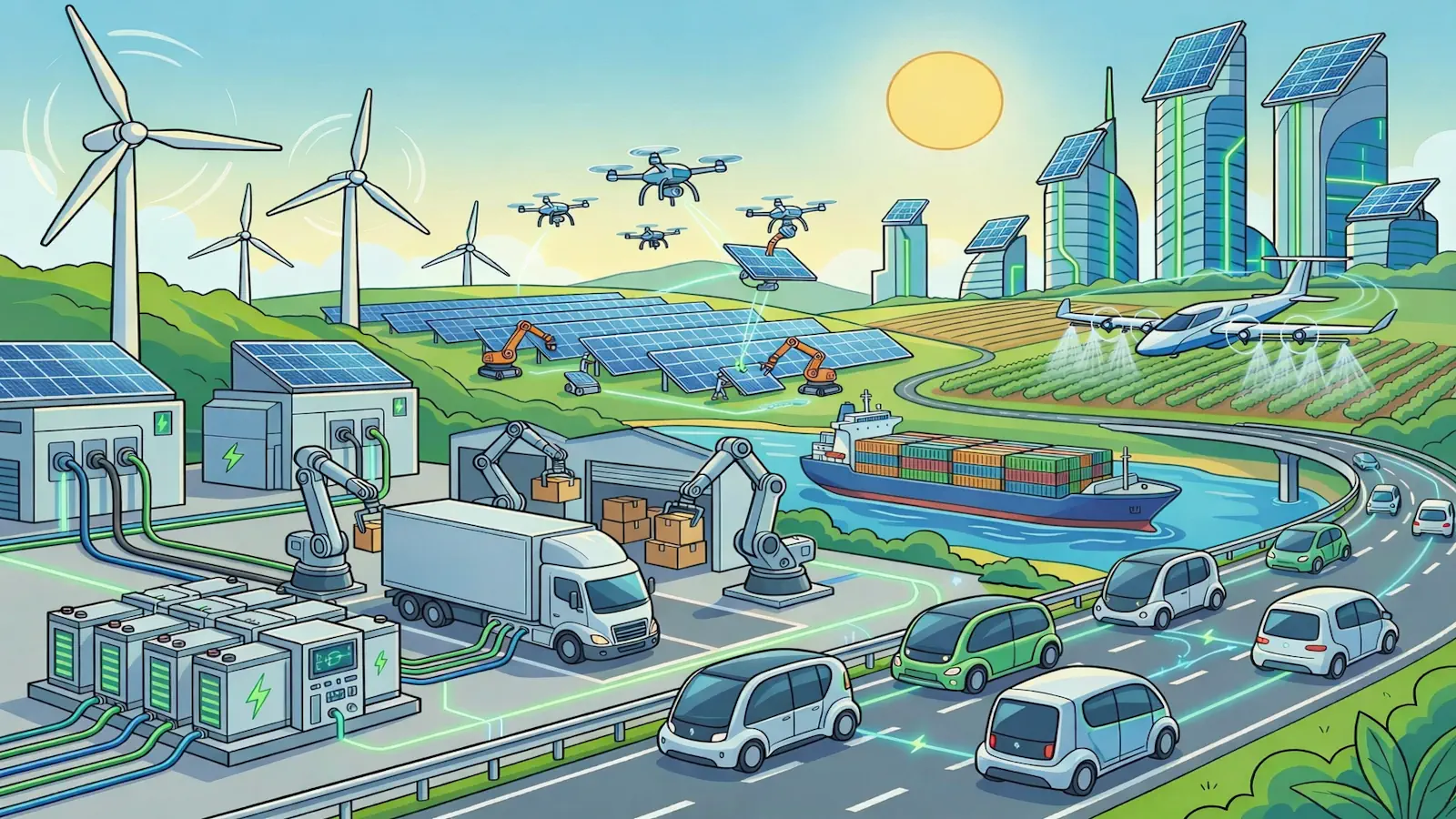
There’s a positive feedback loop between autonomy and electrification
A decade ago, the idea that everything could run on clean electricity felt like a bold bet. Today, it’s obvious. Solar is now the cheapest source of new power in most parts of the world. Battery costs have fallen by nearly 90 percent since 2010. Electric vehicles are now on track to make up a major share of new car sales everywhere on earth.
With electrification no longer in question, the next frontier is how automation plays into it. We often think of autonomy and electrification as separate technologies—one tied to clean energy, the other to AI and robotics. In reality, they are increasingly reinforcing. Electrified systems are inherently more controllable than mechanical ones that run on diesel. That electrification also makes those machines easier to monitor, maintain, and optimize.
Autonomy builds on that foundation. It improves performance and increases utilization, and in doing so it reshapes the economics of entire industries. Together, they create a compounding effect with each layer accelerating the other.
Autonomy is the intelligence layer
The link between electrification and autonomy is already visible on the grid.
Take batteries. Large-scale batteries are no longer passive storage devices that simply charge and discharge on command. Systems like Tesla’s Autobidder and Synop’s’* CMS and EMS allow grid-connected batteries to participate dynamically in energy markets, autonomously buying and selling electricity in real time. In markets like California and Texas, these systems are already generating meaningful revenue, in some cases earning tens of thousands of dollars per megawatt per year. A battery is now an active participant in a dynamic economic system.
In transportation—where vehicles typically sit idle more than 90 percent of the time—autonomy allows them to operate as continuously utilized systems, optimizing routes and managing the energy they use. That automation also strengthens electrification, which powers more efficiency. Internal combustion engines convert roughly 20 to 30 percent of energy into motion, while electric drivetrains convert 70 to 90 percent, according to the U.S. Department of Energy. If a vehicle can drive itself, it can work 24/7. High utilization offsets the high battery cost faster, accelerating the economic justification for going electric.
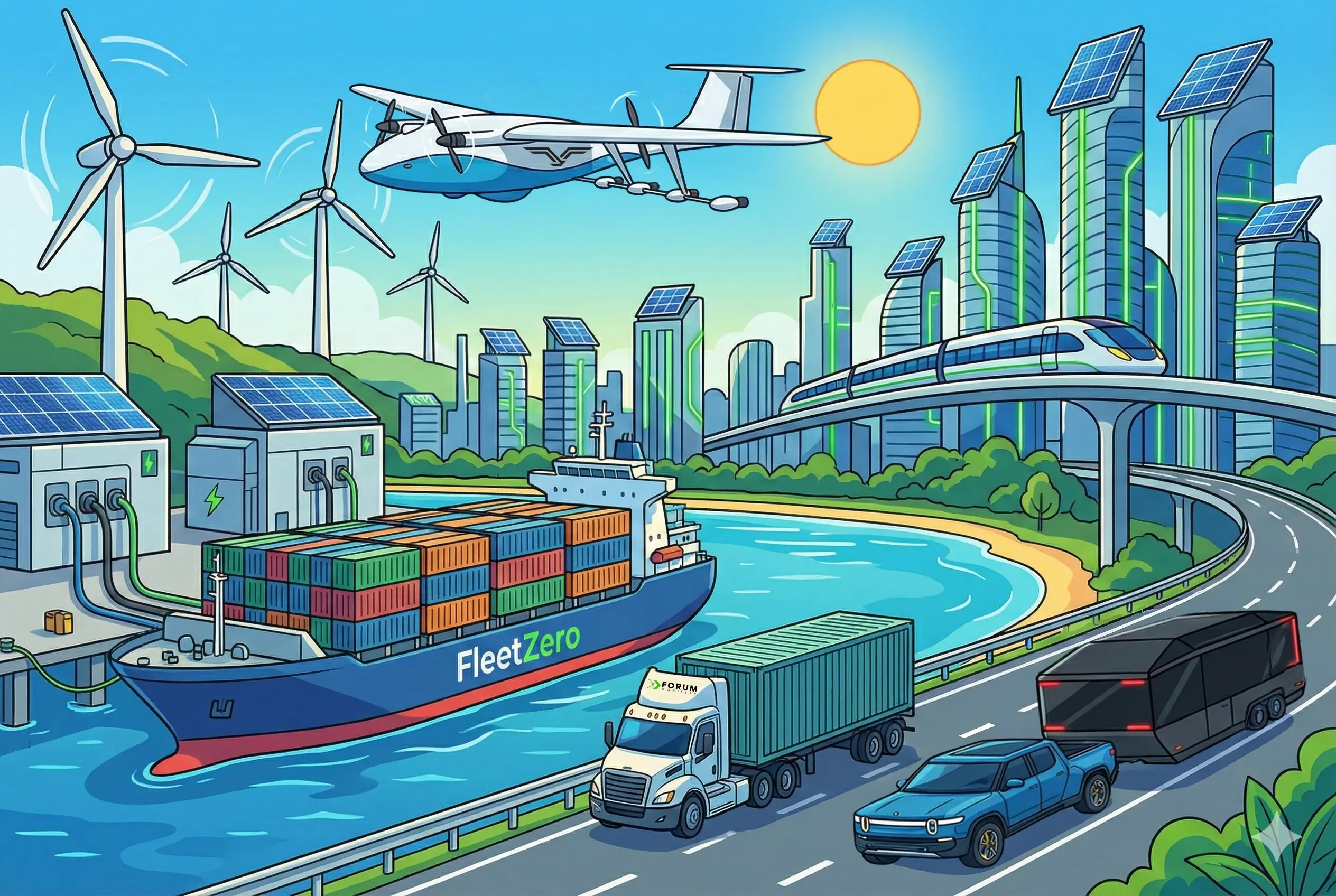
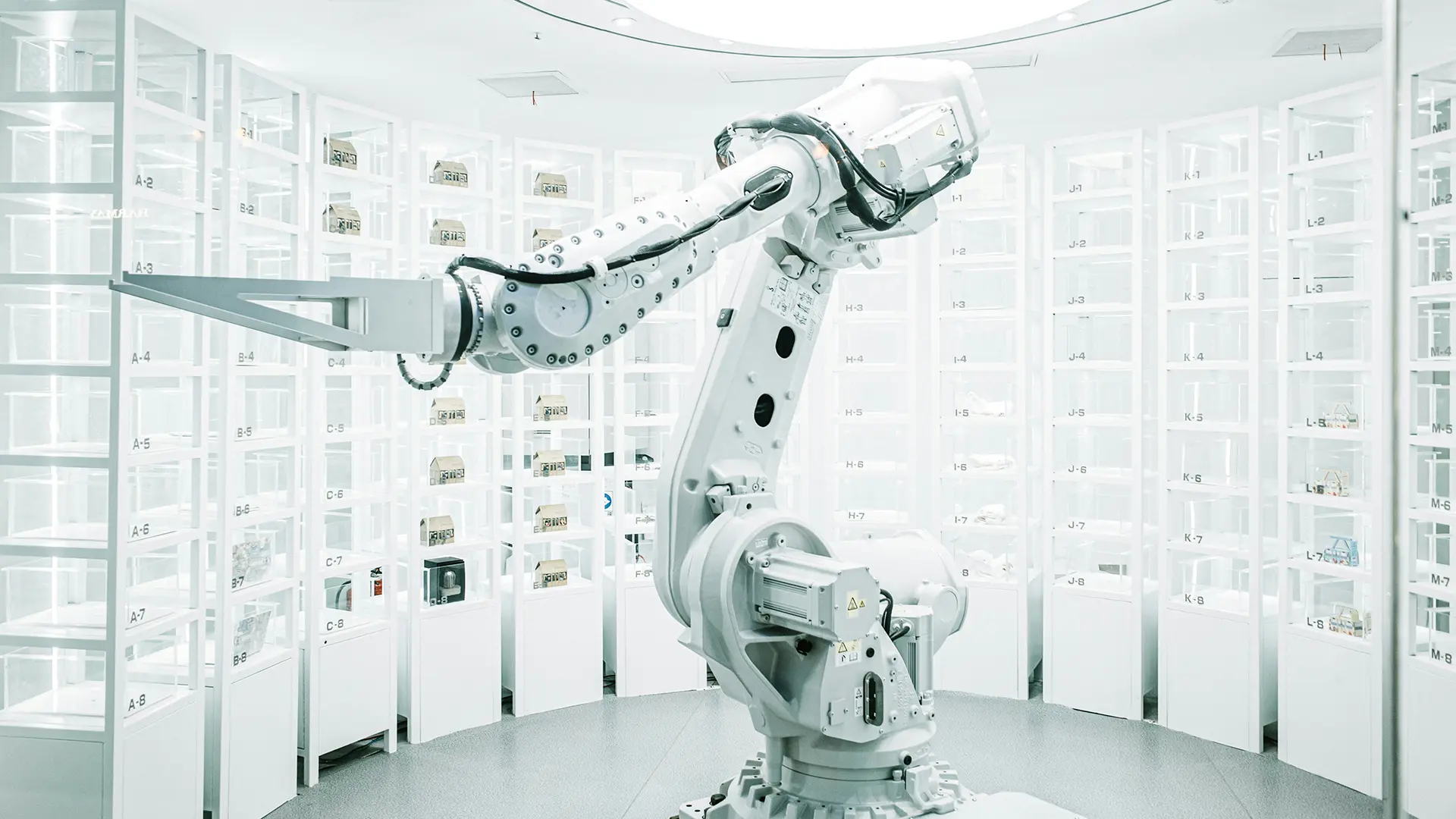
In aviation, companies like Pyka* are building fully autonomous and electric aircraft that operate without onboard pilots, which enables them to fly longer and at lower operating costs. In logistics, systems like those from Dexterity* are taking on physically demanding tasks such as loading and unloading trucks.
The throughline is not just the removal of human labor. It’s the introduction of an intelligence layer that manages electrified systems in real time. Electrification provides the hardware. Autonomy unlocks precision, efficiency, and adaptability.
Removing the “human tax” changes the design entirely
When systems become autonomous, we no longer need to design them around humans.
Most traditional machines and infrastructure are built around human needs and limits. There are obvious elements like safety systems, climate control, and living space, but also less visible constraints like tolerances for motion, visibility, and fatigue. Features like these are baked so deeply into system design that they are often mistaken for technical requirements, even though they’re not.
Many of these are expensive. In commercial shipping, crew-related expenses—including wages, food, insurance, and transport—can account for 30 percent of total operating costs, depending on vessel type and route. Similar dynamics exist across aviation, logistics, and heavy industry, where labor shapes both system design and operating economics.
Shipping makes this visible. A significant portion of a vessel exists to support its crew, like sleeping quarters, plumbing, ventilation, safety systems, and access pathways. Even the ship’s geometry is influenced by human tolerance. If we remove those human-centric elements, the design space opens up. Autonomous vessels can be longer and narrower, improving hydrodynamic efficiency. They can eliminate entire subsystems for sewage and water treatment. They can even lose massive crew quarters and hallways, shedding enormous weight and fuel demand.
The same is true in aviation. Developing and certifying a new commercial aircraft can take more than a decade and cost upwards of $10 billion, largely due to the safety requirements of carrying people. Autonomous electric aircraft, especially in cargo and specialized use cases, can bypass much of that complexity. If humans are not piloting the plane, the design can be radically simplified. And a simplified design makes a plane easier to electrify.
In the same way, autonomous vehicles do not need steering wheels, dashboards, or driver seating. That space can be reallocated for more capacity or more space. We see this manifest in the Zoox vehicle today, and you should expect the same from Waymo soon.
This accumulated cost and complexity is the “human tax.” Autonomy does not just reduce that tax. It allows systems to be reimagined and redesigned without it.
Safety and scale become the same problem
Human-centered design also constrains scale. We talk often at Obvious about dangerous, dirty, and dull work, and how we can eliminate or change those jobs and create new jobs that are safer, cleaner, and more fulfilling.
Many of the most important industries in the global economy, like logistics, construction, energy, and agriculture, are constrained not just by the availability of labor, but by the limits of human safety. These are physically demanding and dangerous environments. As operations scale, so does exposure to injury, fatigue, and failure. Productivity is tied directly to human endurance.
In logistics, loading and unloading trucks is one of the most injury-prone activities in the supply chain. Overexertion and material handling contribute to more than 200,000 musculoskeletal injuries each year in the U.S. In construction and infrastructure, workers contend with heat, dust, uneven terrain, and long hours. The construction industry consistently ranks among the most dangerous sectors, accounting for roughly one in five workplace fatalities. But autonomous robots designed for site preparation, grading, and installation are beginning to take on these tasks, not only to reduce labor shortages, but to improve safety and extend working windows.
Solar installation is my favorite example. Large-scale solar farms are often built where the sun is brightest and hottest. Workers lift and place panels weighing 70 to 80 pounds, often in repetitive cycles over long shifts. When we introduce autonomous systems into this environment, the “intelligence layer” begins to build the “hardware layer.” Autonomous robots don’t just reduce injury; they decouple the growth of clean energy from the limits of human endurance. They can work through the night and in peak heat, installing panels with a precision that lowers maintenance costs for decades. Automation is used to accelerate the deployment of the grid and make the electrification of everything even more viable.
Automation that boosts human flourishing
Much of what I’ve described so far are the technical possibilities of systems, infrastructure, and economics. But the downstream effects are ultimately human.
Automation will inevitably displace certain kinds of work. We are already seeing this in transportation, where autonomous trucks, taxis, and aircraft are beginning to reduce demand for some roles. Similar shifts will follow in logistics, construction, and other labor-intensive industries. These transitions will require thoughtful management and proactive government policy.
What replaces these dangerous and physically demanding jobs is not a single category of “new jobs,” but a shift in the types of work that grow around these systems. Autonomous and electrified infrastructure needs to be built, deployed, monitored, and maintained. That creates demand for technicians who service electric drivetrains and battery systems and operators who oversee fleets of autonomous vehicles. We will need engineers who design, train, and improve the software that runs them. This will also create roles at the system level. A computer can make an optimized logistics plan. But we need a team of humans to implement it. These are jobs that tend to be less physically taxing, more skilled, and more closely tied to oversight, judgment, and system design. And most of all, they’ll likely pay more.
This is not just labor substitution, it’s a shift that builds on the value of human work, creating opportunities to apply skills in new and meaningful ways.
A system that accelerates itself
This transition is already underway, and it accelerates itself. As more infrastructure becomes electrified, it’s easier to layer on autonomy. As autonomy spreads, it improves the economics of electrification by increasing utilization and enabling entirely new system designs, often for lower cost. Each reinforces the other. It’s a feedback loop on both sides.
Some of the possibilities this opens up we can already see. Others we can’t imagine, at least not yet. But the trend line is clear, and the more progress we make in electrification and autonomy, the less friction there is to make even more.
Are you building in electrification or autonomy? Get in touch.
*Asterisk denotes Obvious portfolio company.

Obvious Ideas