Planetary Health
The Next Frontier of the ‘Electrification of Everything’
A decade ago, I wrote a piece called The Coming Electrification of Everything.
At the time, that idea of widespread electrification felt heretical. Lithium-ion batteries were a novelty, solar was still too expensive, and the term “climatetech” hadn’t yet found its footing. The idea that clean electricity, and not carbon-based power, would drive our economy forward was a bold and lonely bet.
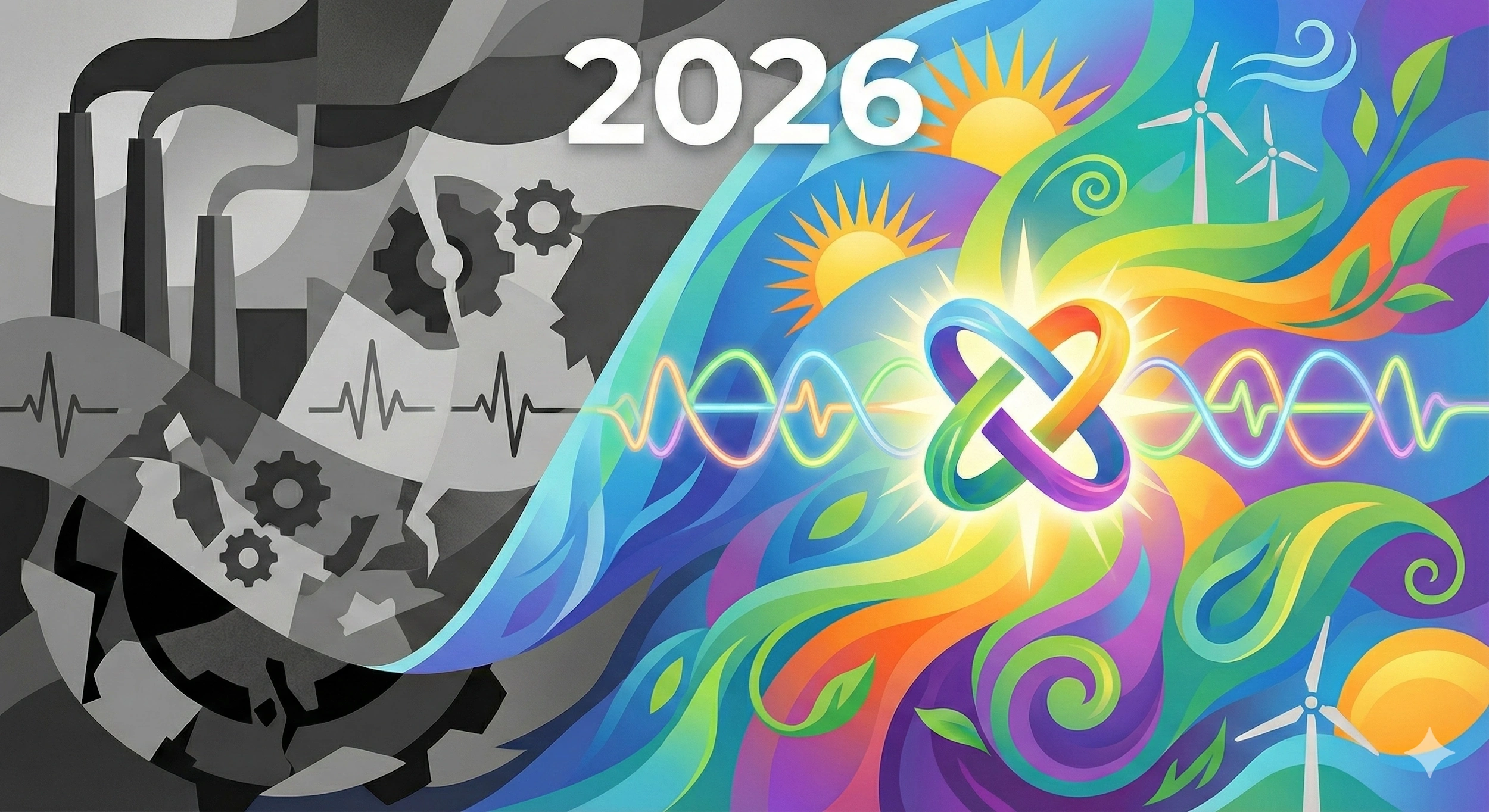
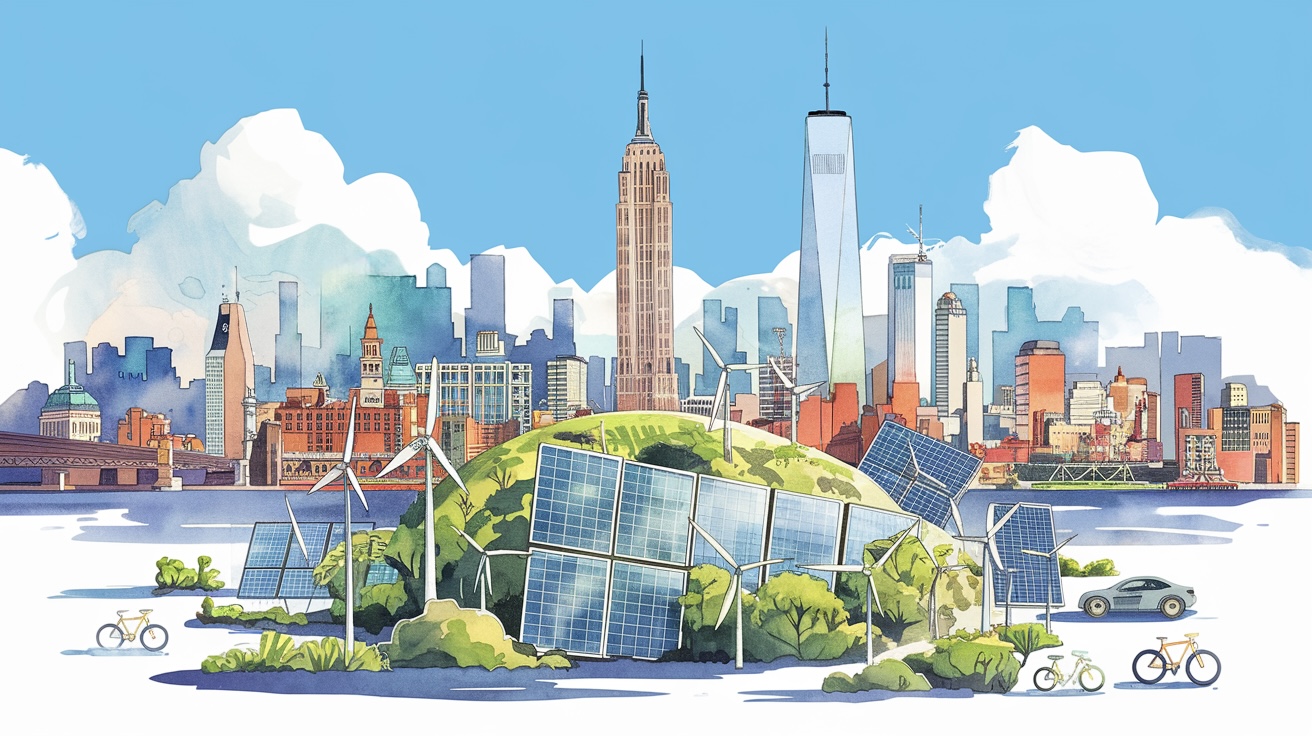
Ten years later, the thesis has held up, and it has matured in ways I could not have predicted. Renewables are now the cheapest source of new power in almost all cases. Electric passenger cars are scaling rapidly, especially in markets like Europe and China. What we called early at Obvious has now become an unstoppable trend. We can power everything with clean electricity, and as the grid decarbonizes, so does the world.
But the journey is far from over. If the past decade was the installation phase, the next decade is the deployment phase. That’s where we’ll see the scale-up that will test global infrastructure and generate the next wave of unicorn companies to take on the world’s biggest challenges.

From Electric Cars to Electric Everything
In 2015, the most exciting frontier in electrification was cars. That’s where attention and capital flowed and where the toughest questions lived. Could electric vehicles truly outperform internal combustion on price and performance? For years, the answer was debated. Now, in much of the world, it’s not. It’s reality.
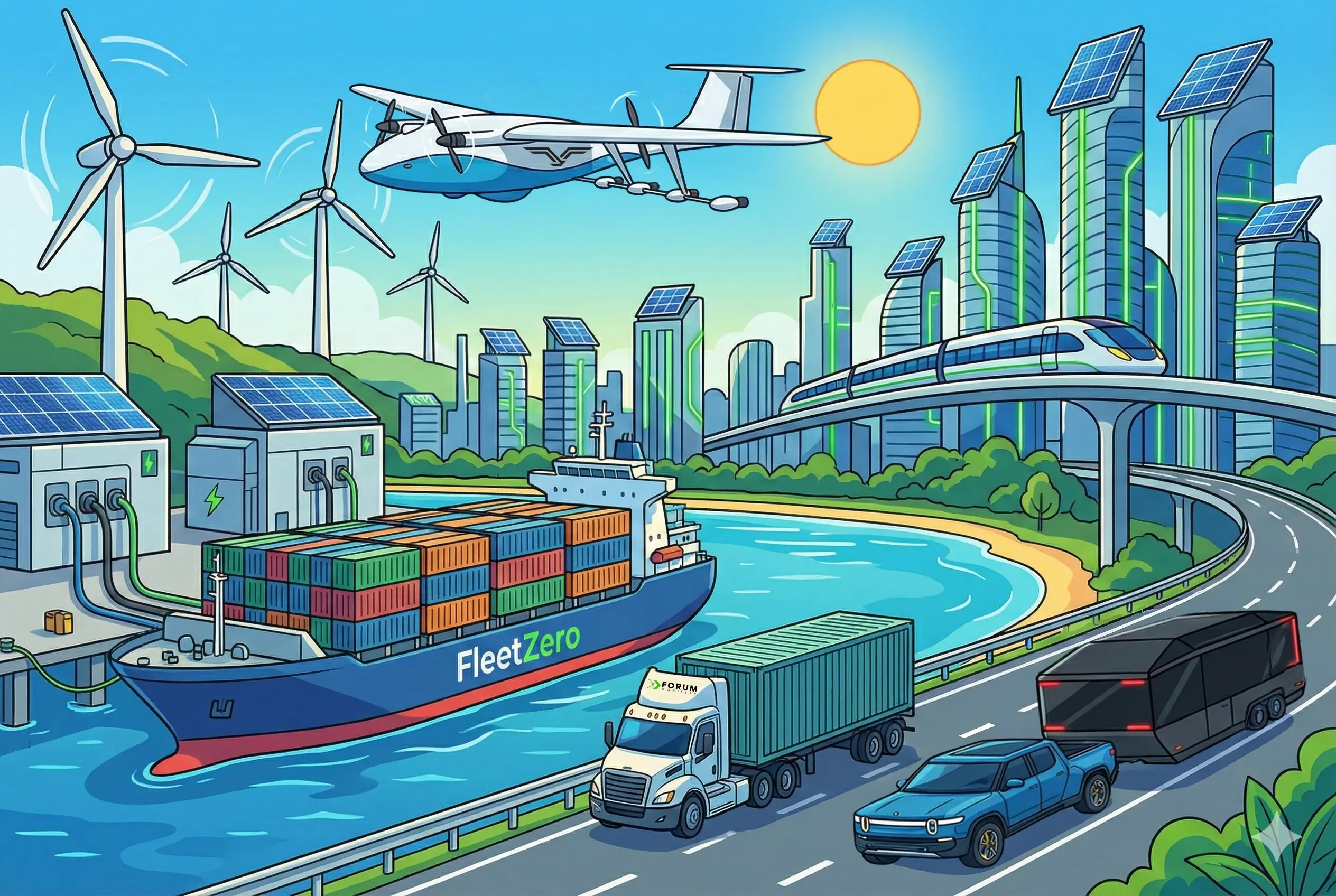
But we always believed cars were just the beginning. The next frontier is moving the goods and services that make modern life possible. Plummeting battery prices, improving battery density, and tighter emissions standards are transforming logistics, transit, and agriculture. Obvious portfolio company Forum Mobility is electrifying short-haul container trucking, where fixed routes and predictable charging make electrification viable today. Another of our companies, Pyka, is flying fully electric aircraft to spray crops and take human pilots out of some of agriculture’s dirtiest and most dangerous work. And Lightship is bringing that same leap forward to RVs, a category once thought incompatible with electrification.
And these are just the visible edge. Electrification is reaching deep into the infrastructure of the modern world, in warehouses, ports, farms, delivery fleets, even the shipping lanes between continents. As more sectors make the switch, the compounding benefits for cost, emissions, and resilience are accelerating.
Electrification as a Path to Robotic Ships
The best example of the dramatic progress on electrification might come from electric ships. A young company called Fleet Zero is demonstrating how to make the transition. The company was founded by former veteran merchant mariners who realized the current shipping industry is not just dirty with pollution, but dangerous and inefficient for the crews. They saw that the future of shipping wasn’t in slow, incremental decarbonization with costly, volatile fuels like ammonia or methanol. The future is full electrification, from engine room to bridge.
Fleet Zero is following the proven short-haul strategy, starting with nearshore, back-and-forth routes—also known as “drayage” of the sea—to build a multi-billion dollar business before scaling to trans-oceanic vessels. The long-term vision is a world where there are no oil slicks, no diesel off-gas, and no need for twelve people to live and breathe in a poorly ventilated engine room.
Their vision is not merely clean ships, but robotic ships. They’ll be fully electric vessels designed from the keel up to be safer, more efficient, and increasingly autonomous. Over time, they will require smaller crews, fewer interventions, and far lower operating costs. We see them as proof of how even our most carbon-heavy industries can make this leap and transform their entire operational model.
The New Phase of Electrification
One of the most useful frameworks we’ve found comes from economist Carlota Perez, who describes technological revolutions in two stages: the installation phase, when technologies emerge and spread in fits and starts, and the deployment phase, when they scale and reshape society.
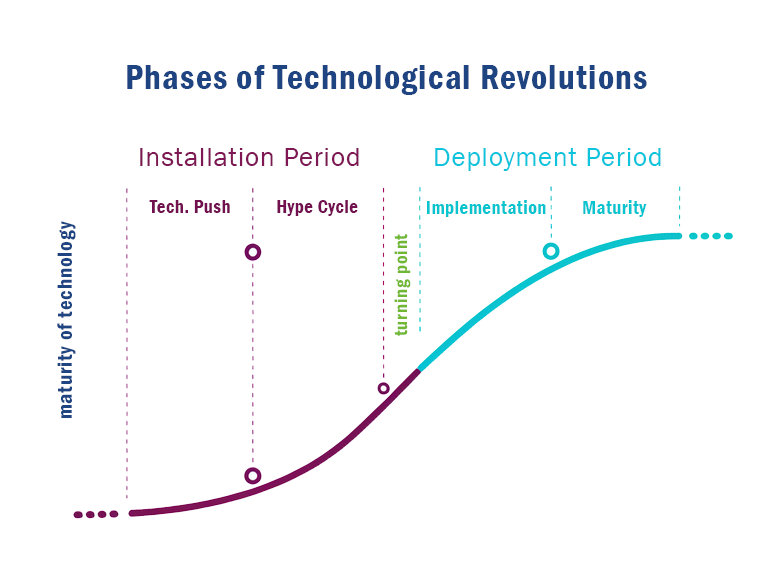
In much of the West, we’re still in the early installation phase (asking “is this for real?”). But in China, electrification is already entering deployment. It’s not hypothetical, it’s happening. Massive adoption. Massive buildout. And most importantly, massive integration.
China leads the world in electric vehicle sales, with more than 11 million sold last year alone. Its high-speed rail and public transit systems are almost entirely electric. The country has also built an ultra-high-voltage transmission network that moves clean power across vast distances, and it’s electrifying entire sectors of heavy industry—from steel to chemicals—as part of its national climate strategy.
China’s core motivation, as Sightline Climate CEO Kim Zhou recently documented, is not primarily climate or even industrial dominance. It is sovereignty. It wants to control its own energy supply by reducing exposure to foreign fuel markets. Owning the technologies that power the next century will bring compounding strategic rewards.
Meanwhile, in the United States, instead of doubling down and positioning ourselves for leadership, our federal government is slowing our progress through delays, mixed signals, and constant policy whiplash. Luckily, states and, more importantly, great founders are boldly carrying the torch and pushing electrification forward anyway.
What Comes Next
We’ve started to use a term: gridlock. Not the political kind, but the infrastructural kind. As more electric vehicles, appliances, ships, and aircraft connect to the grid, we’ll need far more capacity and intelligence at both the transmission and distribution levels.
This won’t be solved by hardware alone. It will take AI-driven management software, real-time balancing systems, and smarter storage. Companies like Synop and Arbor will help to load balance and scale the clean grid (without hardware adds). We see this as the next great frontier of climate tech.
But it’s important to zoom out. Electrification isn’t just a climate solution. It’s a platform shift. It redefines what’s possible in mobility, in infrastructure, and in economic development. And it opens the door to autonomy in a way that dirty, mechanical systems never could.
We’ve spent a decade watching this thesis evolve from foresight to foundation. It’s no longer about what’s coming. It’s about how fast it’s arriving, and whether we can build quickly enough to meet it.
Andrew Beebe is an Obvious Managing Director. Follow him on Linkedin.

Obvious Ideas