Operations
Inside the First World Positive Summit
Obvious stays one step ahead by bringing together bold thinkers and big ideas
The driving philosophy behind Obvious is a simple belief that the most valuable companies of our time will be the ones solving humanity’s biggest problems. But backing those companies requires more than capital. It requires perspective to see where the world is going and to stay one step ahead of what comes next.
Last month in San Francisco, we brought that belief to life with the inaugural World Positive Summit, a wide-ranging gathering of founders, scientists, executives, academics, and our trusted investor network. The summit was a roaring intellectual engine, a place to test assumptions, challenge orthodoxies, and explore the technologies and ideas reshaping planetary health, human health, and economic health.
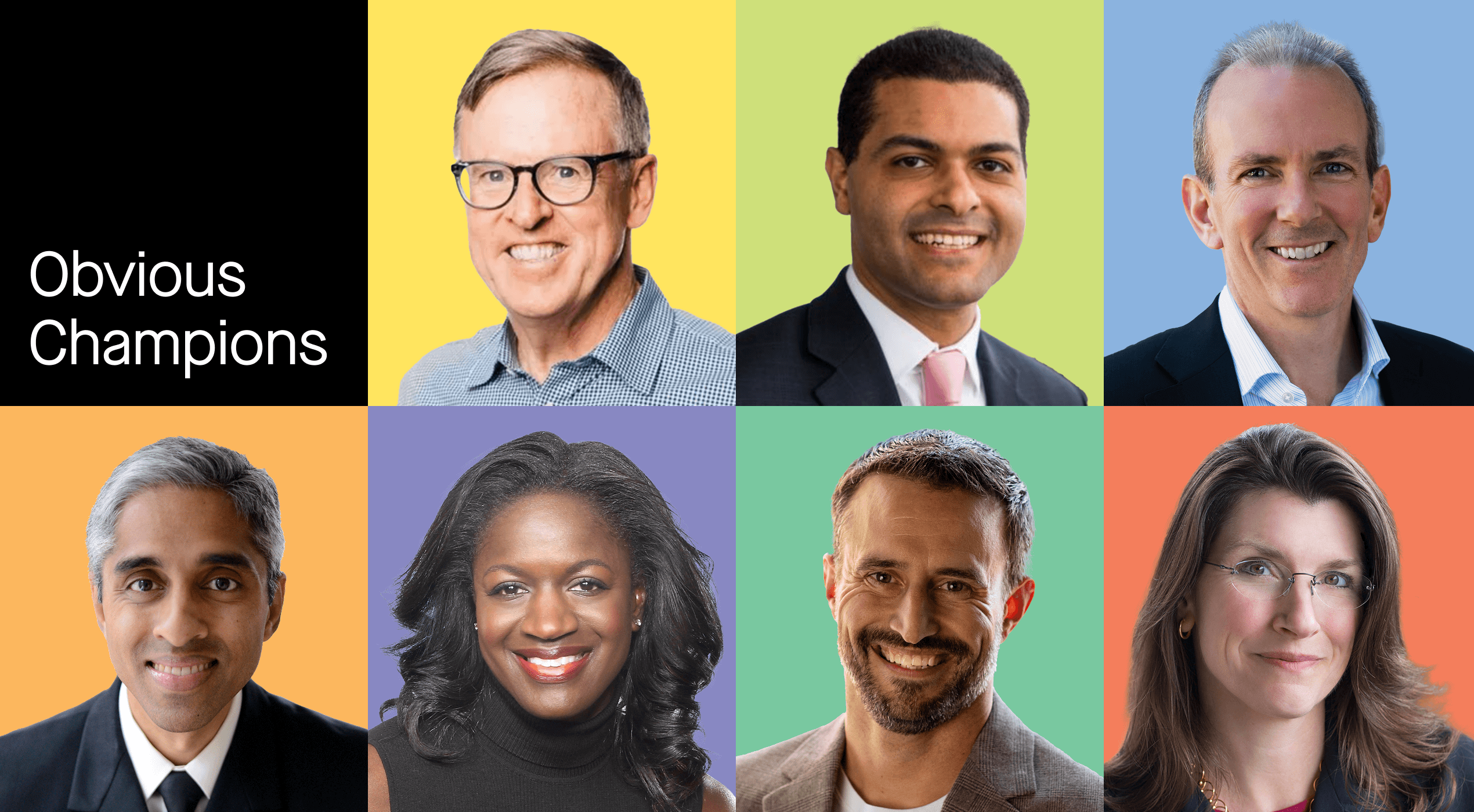
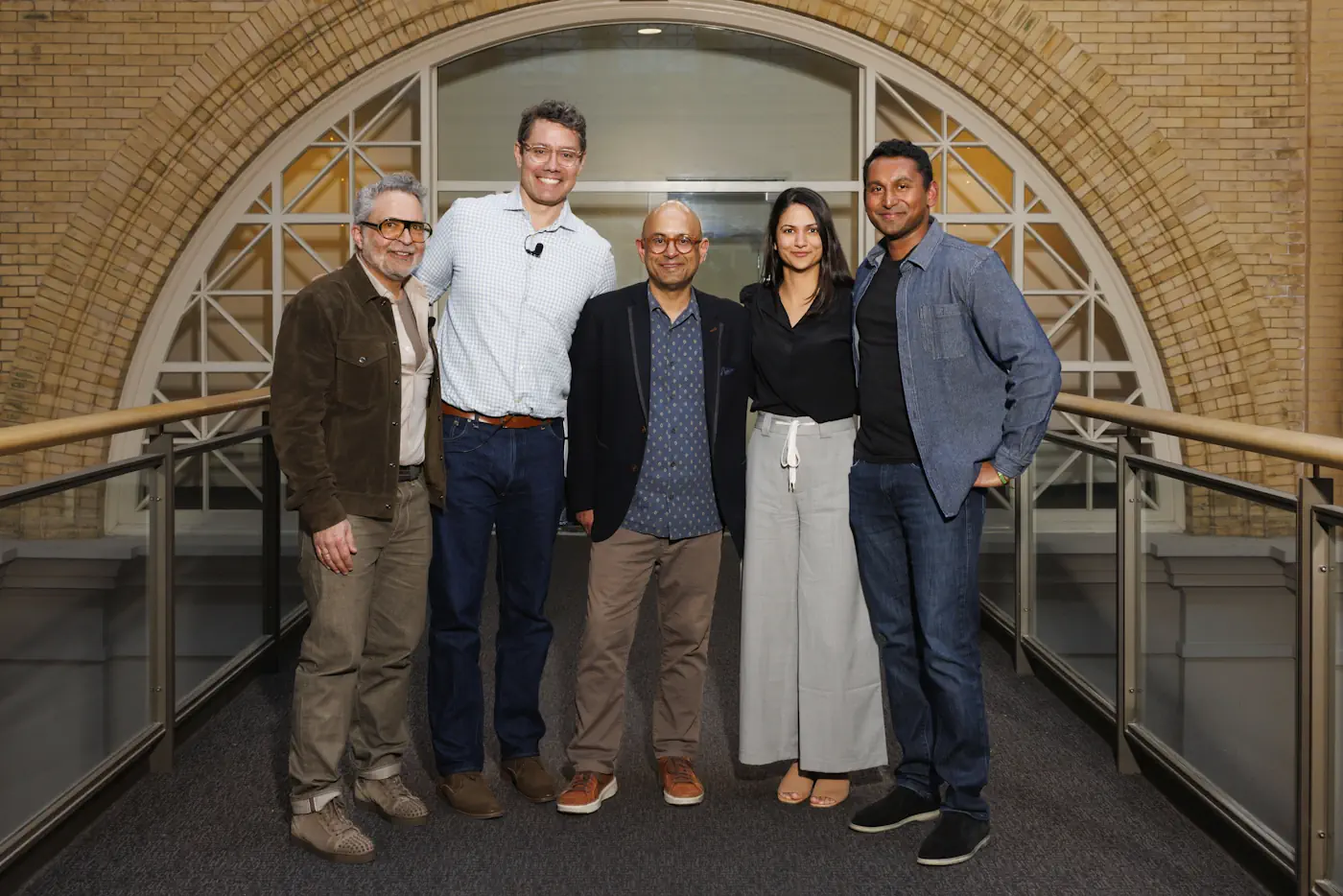
Obvious investors James Joaquin, Andrew Beebe, Vishal Vasishth, Kahini Shah and Rohan Ganesh hosted conversations that spanned disciplines and sectors. They were joined by Obvious Champions Vivek Murthy, Michele Catasta, Joanne Bradford, and Rene Lacerte. The throughline was clear: the pace of World Positive innovation is accelerating, and the implications for energy, medicine, and human flourishing are profound.
What emerged was not a single narrative, but a constellation of insights that pointed toward the same conclusion, that the future is arriving faster than expected, and the people building it are feeling a sense of urgency and opportunity to build solutions that solve real problems and foster human connection.
Insight 1: Technology is unlocking unexpected forms of abundance
For decades, geothermal energy was seen as a promising but limited resource. Most of the accessible sites had already been tapped, and the cost and uncertainty of exploration made expansion difficult.
Carl Hoiland, CEO of Zanskar, described how that assumption is collapsing. By applying artificial intelligence to geological data, Zanskar has been able to identify and drill into geothermal reservoirs that were previously invisible, unlocking carbon-free, baseload power at a scale few thought possible. At one site in New Mexico, their models led to the discovery of what became the most productive geothermal well of its kind, repowering an entire plant and setting new generation records.
This is a core Obvious pattern, not incremental improvements, but step changes when new tools make previously inaccessible systems legible and actionable. When that happens, scarcity gives way to abundance and shifts entire industries.
The same dynamic is playing out across climate and energy. Melanie Nakagawa, chief sustainability officer at Microsoft, and Amanda Peterson Corio, head of data center energy at Google, spoke candidly about the tension between explosive AI-driven demand for electricity and the imperative to decarbonize. Brian Janous, former VP of Energy at Microsoft and now CEO of Cloverleaf Infrastructure, added perspective on how rapidly the landscape is evolving. Yet they were equally clear about the opportunity. Demand is accelerating innovation. Clean energy deals, long-duration storage, carbon sequestration, and next-generation nuclear investments are advancing faster precisely because the need has become acute and urgent, and because the world’s most ambitious companies are committing to build their way toward a carbon-free future.
Insight 2: AI is expanding what is possible to build, and who can build it
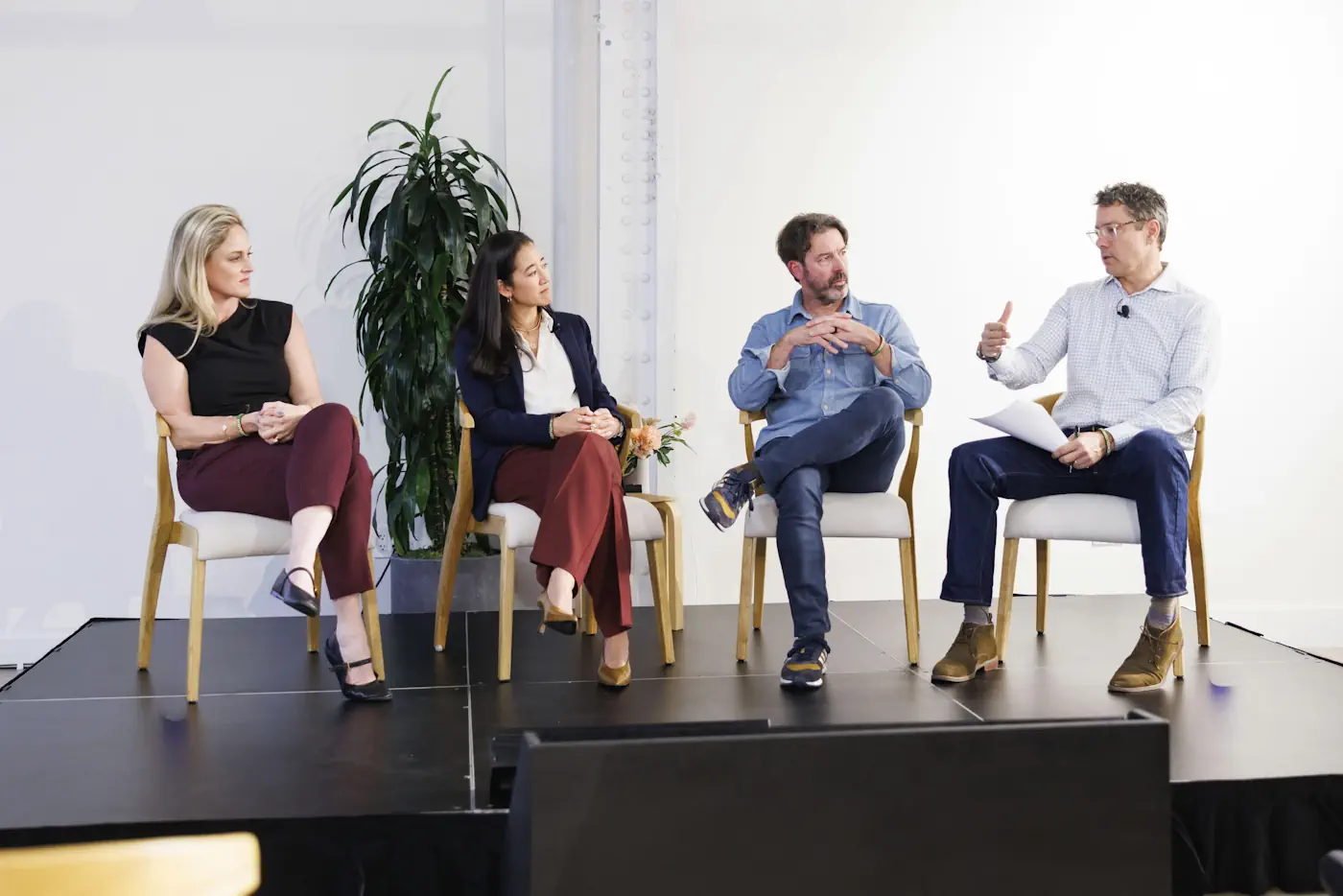
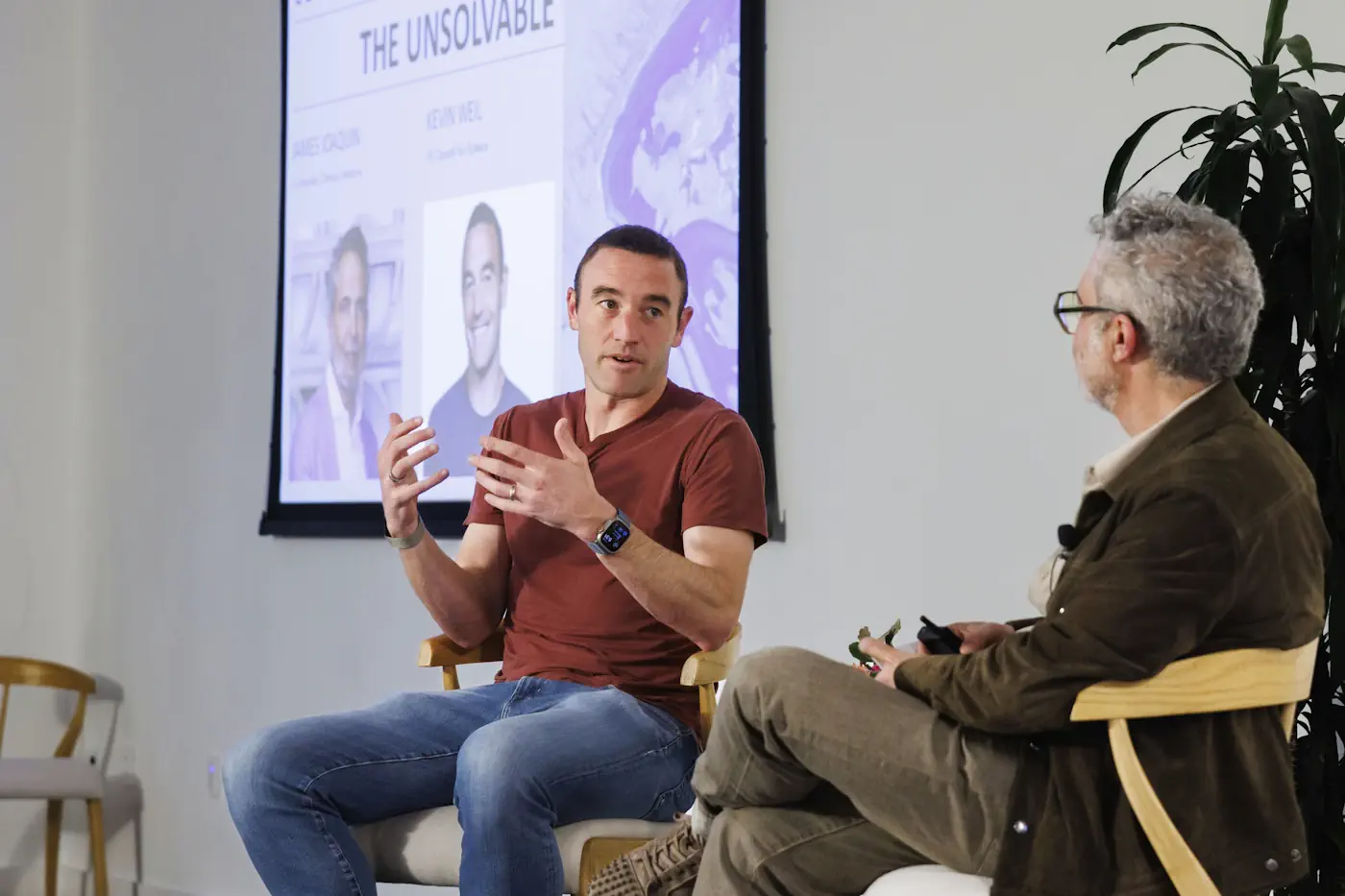
Few people have witnessed technological acceleration as closely as Kevin Weil. As former head of product at Twitter and Instagram, president of Planet, and now VP of science for OpenAI, he has helped shape platforms that reach billions of people. He described how the constraints that once defined software development and innovation more broadly are dissolving.
The most profound shift, he explained, is speed. At OpenAI, he recently watched a tiny team build and ship a fully functional Android app in just three weeks using AI coding systems, without writing most of the code themselves. In another instance, engineers were able to identify bugs, generate fixes, and deploy working code in the time it took to ride across town. What once required months of coordinated work across multiple teams can now be done by individuals in hours.
This acceleration is not just compressing timelines. It is fundamentally changing who gets to build. AI tools are making it possible for people without formal engineering backgrounds to create functional software, prototypes, and entirely new products. In one example shared during the summit, a non-technical operator built an internal product using AI tools that opened an entirely new revenue stream for their company, something that had previously stalled because of the limited bandwidth of engineers.
This democratization of creation has cascading effects. It accelerates innovation across every domain, from software to science to medicine. It compresses timelines from years to months, and sometimes days. It lowers barriers for founders pursuing unconventional ideas. And it enables a new generation of builders to tackle problems that were previously constrained by the limits of available tools.
Insight 3: Health is not just biological—it is systemic, social, and scalable
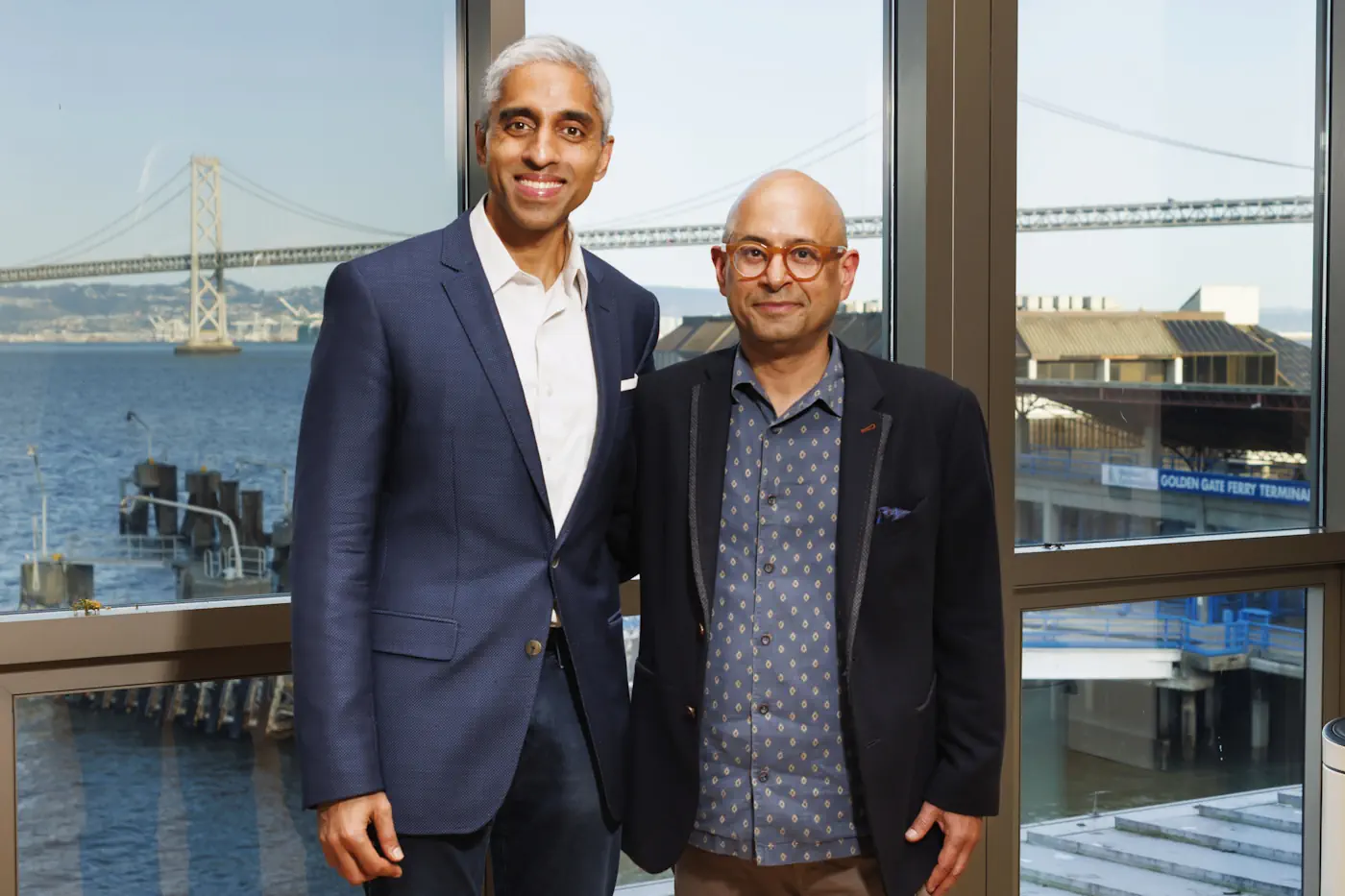
Dr. Vivek Murthy, former two-time U.S. Surgeon General and current Obvious Champion, reframed health not simply as physical well-being, but as a multidimensional system encompassing mental, social, and spiritual health. These dimensions, he explained, are deeply intertwined. Loneliness, loss of purpose, and social fragmentation are not abstract societal concerns. They are measurable drivers of illness, burnout, and declining life expectancy.
Murthy’s own career reflected that shift in perspective. After years of treating individual patients, he became increasingly drawn to the systems shaping health at scale—helping build organizations to expand access, improve clinical trials, and strengthen healthcare infrastructure. Improving individual outcomes, he argued, ultimately requires redesigning the broader systems in which people live and receive care.
That same shift is now driving a new generation of physician-founders. In another session, leaders Adam Osokowitz, Sharif Vakili, and Jan Witowski described how they have moved from practicing medicine to building AI-native healthcare companies. All mentioned that the greatest opportunity for impact is not only in treating patients one at a time, but in scaling systems that expand access and improve care for millions.
The challenge now is to extend those breakthroughs beyond the frontier. And to support more founders and builders who understand that health care is increasingly something that can be redesigned at scale.
Insight 4: Purpose and personal growth are key to enduring impact
Blake Mycoskie, founder of TOMS, shared a personal reflection on what happens after success. Despite building a company that generated hundreds of millions in revenue and delivered over 100 million pairs of shoes to children in need, he found himself struggling with purpose and identity. His journey underscored a truth that resonates across entrepreneurship: material success alone is not enough. Builders need meaning, community, and connection to sustain themselves and their work.
Obvious Champion Rene Lacerte, founder and CEO of Bill, echoed a related insight. Entrepreneurship, he said, is a form of expression, an act of putting one’s beliefs into the world. But it requires constant growth. Founders must evolve continuously to learn from setbacks and adapt to new realities. In many ways, the role of founder becomes a lifelong identity.
These conversations reinforced a core principle behind Obvious’ approach. The best companies are not built by opportunists. They are built by people driven by conviction who are willing to pursue difficult problems because they believe the work matters. We are always eager to partner with those kinds of people.
Insight 5: World Positive innovation requires a World Positive community
If there was one meta-theme that emerged from the summit, it was the importance of convening.
Innovation does not happen in isolation. It happens at the intersection of disciplines, perspectives, and lived experiences. It happens when investors talk to scientists, when policymakers engage with technologists, and when we all ask sharp questions to challenge assumptions.
The World Positive Summit is to build those intersections. It brought together leaders from Obvious portfolio companies, alongside pioneers in AI, healthcare, and climate. It created space for frank conversations about what is working, what is not, and the areas most ripe for innovation.
Just as importantly, the summit created space for something harder to manufacture: trust. Builders shared unfinished ideas. Scientists described open questions. Founders spoke candidly about uncertainty and conviction. These moments of intellectual honesty are where real insight emerges, not only from polished presentations, but from a sense of shared exploration. Capital is only one part of the equation. Ideas, relationships, and shared purpose matter just as much.
Staying one step ahead
The inaugural World Positive Summit marked the beginning of something new for Obvious and our community. The conversations that unfolded were not abstract or theoretical, they reflected real inflection points on the horizon.
Convenings like this help us identify signals early and investigate new questions and areas of opportunity. Just as importantly, they strengthen the relationships among Obvious builders and investors and leave us with a broad sense of conviction about the immense challenges ahead. The summit made one thing profoundly clear. The people capable of addressing them have the tools and ideas to transform.
Sign up to receive Obvious’ newsletter to follow the ideas and builders shaping a World Positive future, and to learn about more events bringing together the World Positive community.
Obvious Ideas